
Pourquoi le choix des rails de porte de garage et des pièces de fixation est-il si important ?
Lorsqu'un rail de porte de garage tombe en panne, il peut provoquer des bruits assourdissants, un désalignement ou une panne totale. S'il n'est pas résolu, cela perturbe le quotidien, cause des dommages coûteux et présente des risques de blessures. La solution ? Optez pour des systèmes de rails de porte de garage fiables et de haute qualité, conçus pour la durabilité et la facilité d'entretien.
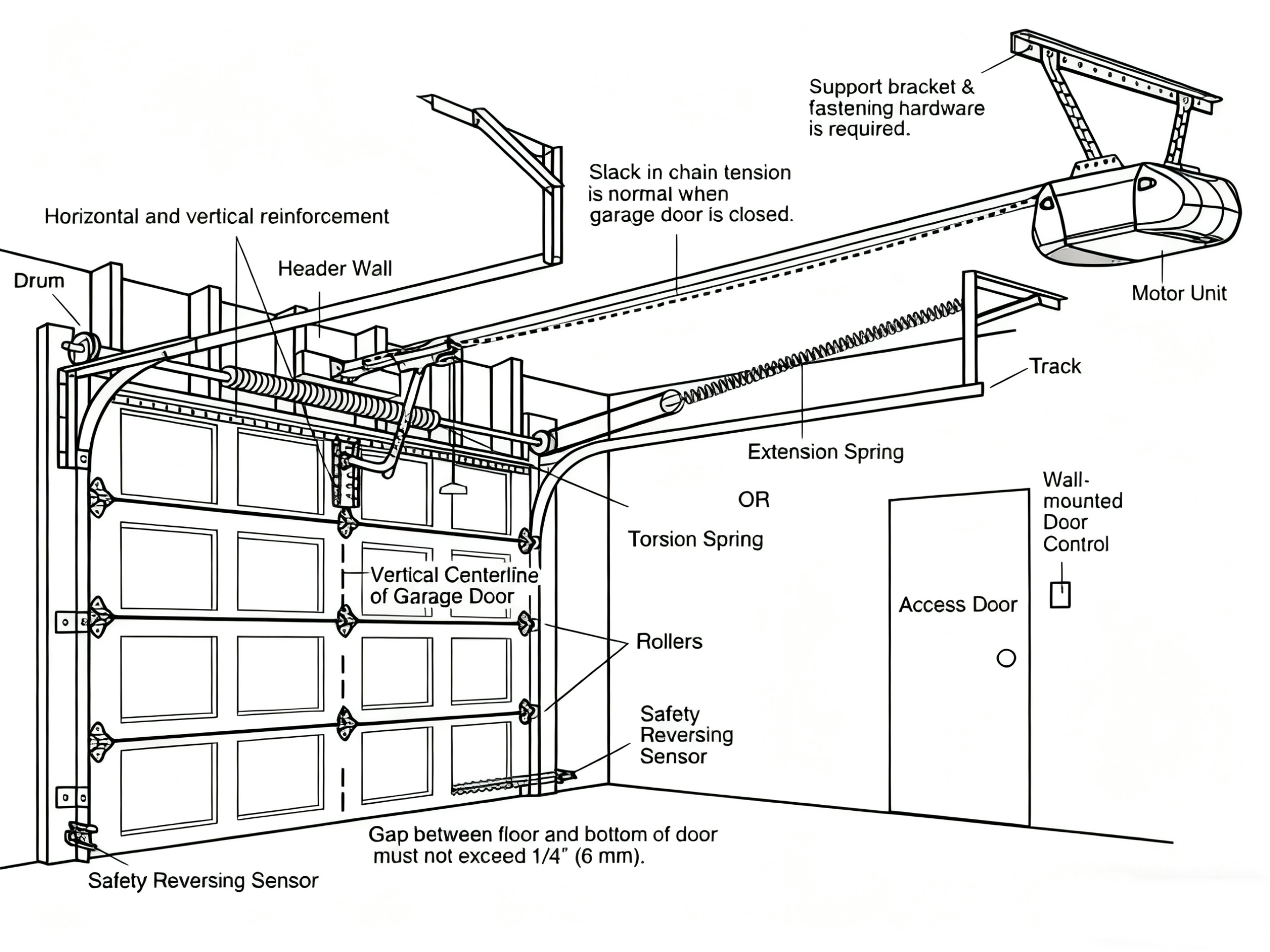
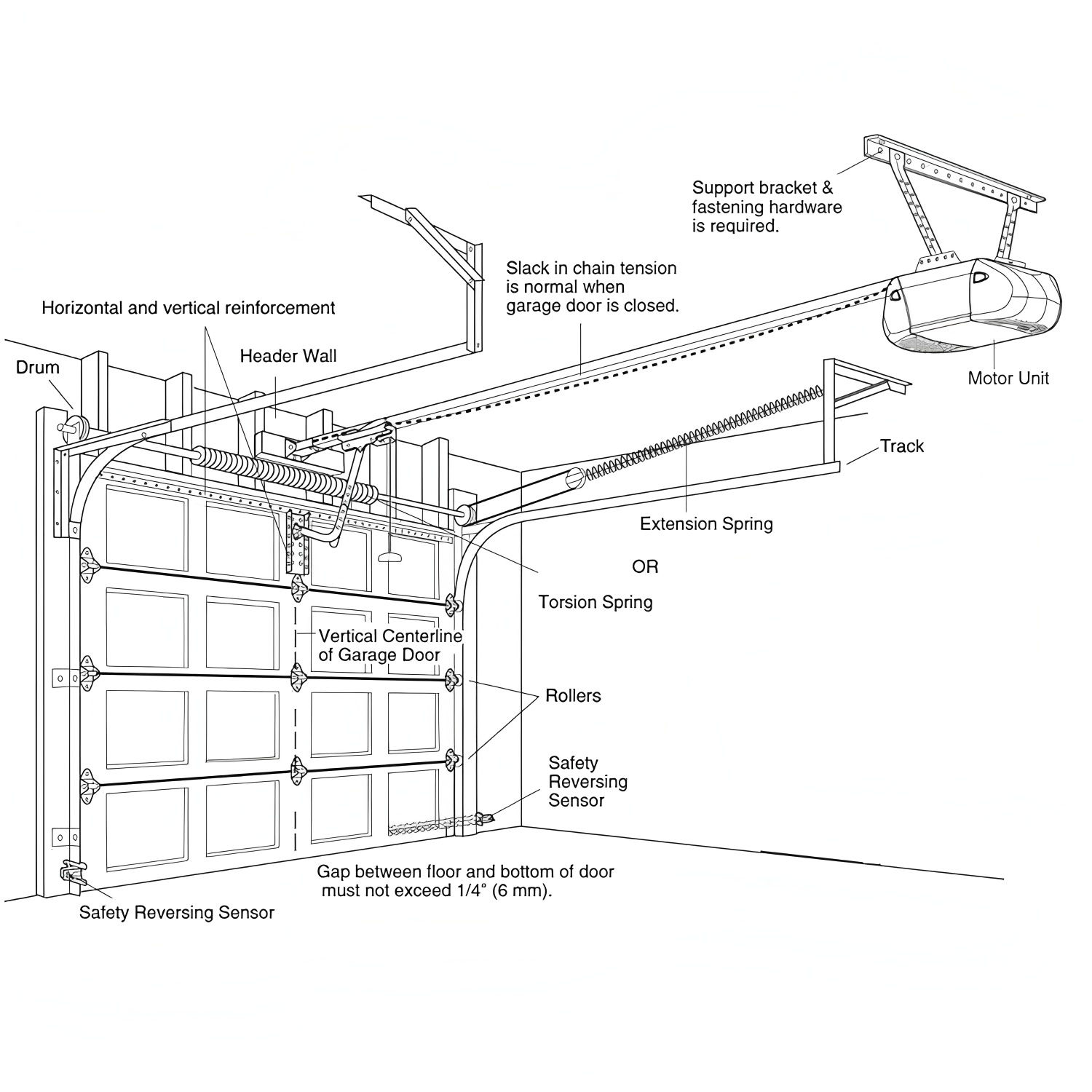
Les rails de porte de garage et les pièces de fixation guident le mouvement fluide et équilibré de la porte. Ils doivent être robustes, conçus avec précision et bien soutenus pour une performance optimale.
Quelles sont les dimensions et caractéristiques standard des rails de porte de garage ?
Les dimensions des rails de porte de garage varient en fonction de la hauteur, du poids et du type de conception de la porte. Les rails verticaux standard font généralement entre 2 et 3 pouces de largeur. Les portes résidentielles utilisent généralement des rails de 2 pouces, tandis que les portes commerciales ou industrielles plus lourdes peuvent nécessiter des rails de 3 pouces pour une capacité de charge accrue.
Les rails sont généralement en acier galvanisé pour résister à la corrosion et assurer la durabilité. L'ingénierie de précision garantit que le rail permet aux galets de glisser en douceur. Les rails courbes ou arrondis relient les segments verticaux et horizontaux, avec des courbures de rayon de 12″, 15″ ou 32″. Un rayon plus serré nécessite plus de hauteur libre mais permet un enroulement de porte plus compact.
Les principales caractéristiques à évaluer lors du choix d'un kit de rail de porte de garage sont les suivantes :
- L'épaisseur du rail (les rails plus épais résistent mieux à la flexion)
- Le style de fixation (sur angle ou sur support)
- Le type de levage (levage standard, levage vertical, levage surélevé ou options pour plafonds bas)
- Le revêtement du rail (zinguage ou peinture en poudre pour la protection contre la corrosion)
Choisir les bonnes dimensions et caractéristiques est essentiel pour un fonctionnement fluide et la sécurité. En cas de doute, s'associer à un fabricant de confiance comme Ruichi Hardware garantit des options adaptées avec précision et personnalisables.
Comment réparer une porte de garage désalignée et quand réparer ou remplacer le rail ?
Les signes les plus courants d'un rail endommagé sont :
- La porte s'accroche ou saccade pendant le mouvement
- Des grincements ou bruits de raclage forts
- Des bosses, des plis ou de la rouille visibles sur le rail
- Une porte de garage visiblement désalignée ou “ hors de ses rails ”
Si une porte est désalignée, commencez par débrancher l'ouvre-porte et abaissez ou remontez manuellement la porte pour inspecter les dommages. Utilisez des pinces de blocage pour maintenir la porte en place et repositionnez les galets dans le rail. Les légères déformations peuvent parfois être corrigées à l'aide de pinces et d'un maillet en caoutchouc, mais les déformations sévères, la rouille ou les fissures nécessitent un remplacement.
Pour des solutions plus durables, envisagez un kit de remplacement de rail de porte de garage. Ces kits incluent généralement des rails verticaux et horizontaux prédécoupés et pré-percés, des supports et des fixations. Assortir le rayon du rail et le système de levage garantit un fonctionnement fluide et une compatibilité avec le système de porte existant.
L'entretien régulier—comprenant le nettoyage, la lubrification et les vérifications d'alignement—contribue à réduire l'usure et à prolonger la durée de vie de votre système de rail. Le partenariat avec des fournisseurs OEM/ODM comme Ruichi garantit l'accès à des pièces de rechange compatibles avec une large gamme de modèles de portes.
Que devez-vous savoir sur les supports de rail de porte de garage et leur fixation ?
Les supports de rail sont essentiels pour soutenir le poids de la porte et maintenir l'alignement. Une fixation incorrecte peut entraîner des désalignements fréquents, voire des dommages structurels.
Les rails de porte de garage sont généralement fixés à l'aide de :
– Attaches murales : Fixées à la paroi latérale du garage, généralement pour les rails verticaux
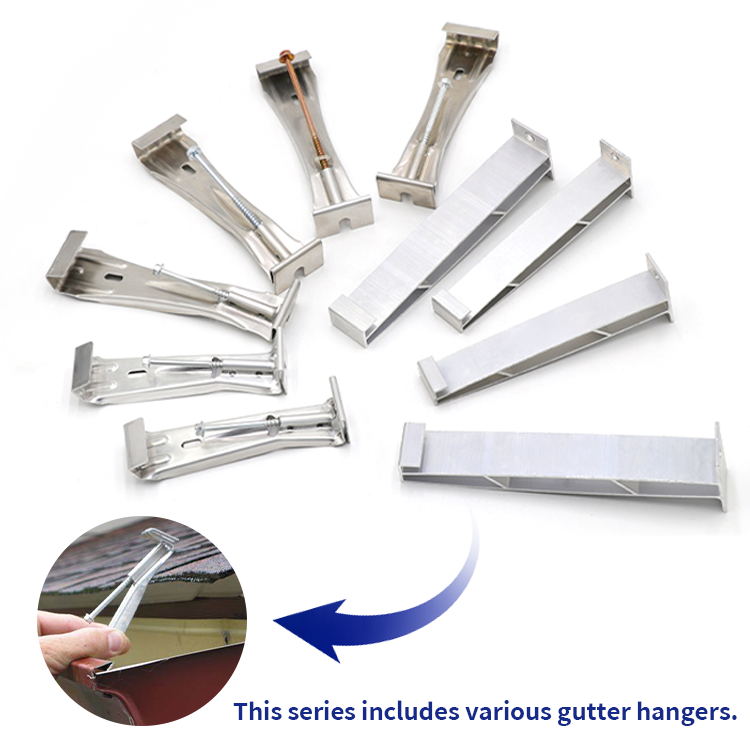
– Suspentes de plafond : Soutiennent les rails horizontaux et maintiennent l'alignement en hauteur
– Supports en fer d'angle : Offrent une résistance supplémentaire, notamment dans les applications à cycle élevé ou intensives
Chaque support doit être solidement fixé, de niveau et correctement espacé. Une installation incorrecte ou un montage lâche peut provoquer des vibrations, un affaissement ou le déraillement de la porte. Lors de l'installation, il est essentiel d'utiliser :
– Des boulons ou vis à bois de qualité industrielle
– Des outils de nivellement pour maintenir l'alignement du rail
– Des attaches de montage adaptées à la taille du rail
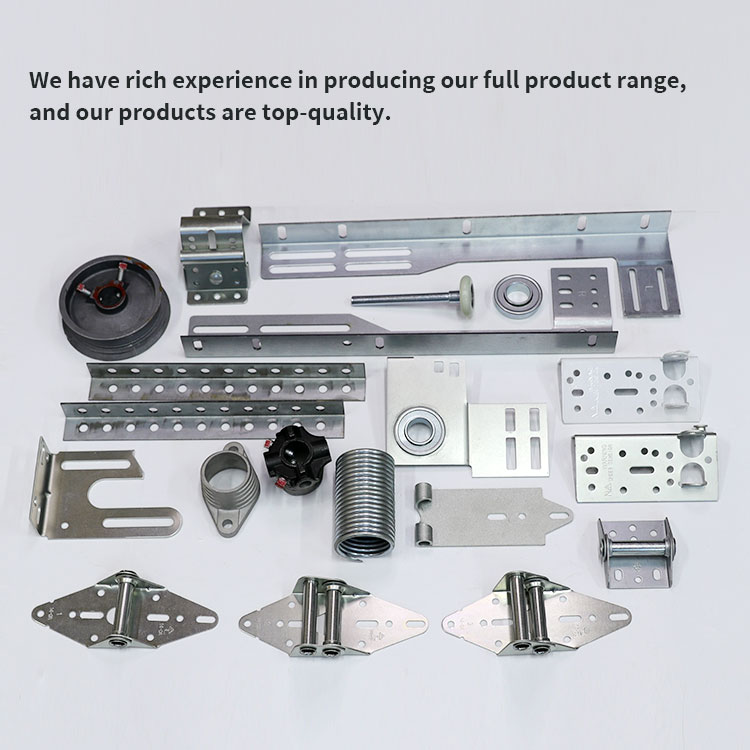
Les solutions de fixation sur mesure, telles que les attaches pré-percées ou les suspentes renforcées, sont souvent incluses dans un kit complet de rail de porte de garage. Ruichi Hardware propose des quincailleries de fixation avec des tolérances prédéfinies pour des installations rapides et précises, minimisant les risques de désalignement de la porte ou d'usure à long terme.
Qu'est-ce qui fait un kit de rail de porte de garage fiable ?
Un kit de rail de porte de garage comprend généralement :
– Rails verticaux et horizontaux (acier galvanisé ou revêtu)
– Segments de rail à rayon courbé
– Attaches de montage et fers d'angle
– Fixations (écrous, boulons, rondelles)
– Composants de renforcement optionnels pour les systèmes à élévation haute
Les kits de haute qualité sont fabriqués avec précision, avec des tolérances serrées, des surfaces résistantes à la corrosion et une compatibilité avec diverses tailles et marques de portes. Recherchez des kits qui prennent en charge les tâches de réparation courantes telles que :
– Comment remettre une porte de garage sur rail
– Comment réparer le rail d'une porte de garage
– Remplacement du rail de porte de garage
Certains kits peuvent inclure des accessoires comme des guides à rouleaux ou des revêtements anti-rouille, qui améliorent la longévité et réduisent l'entretien.
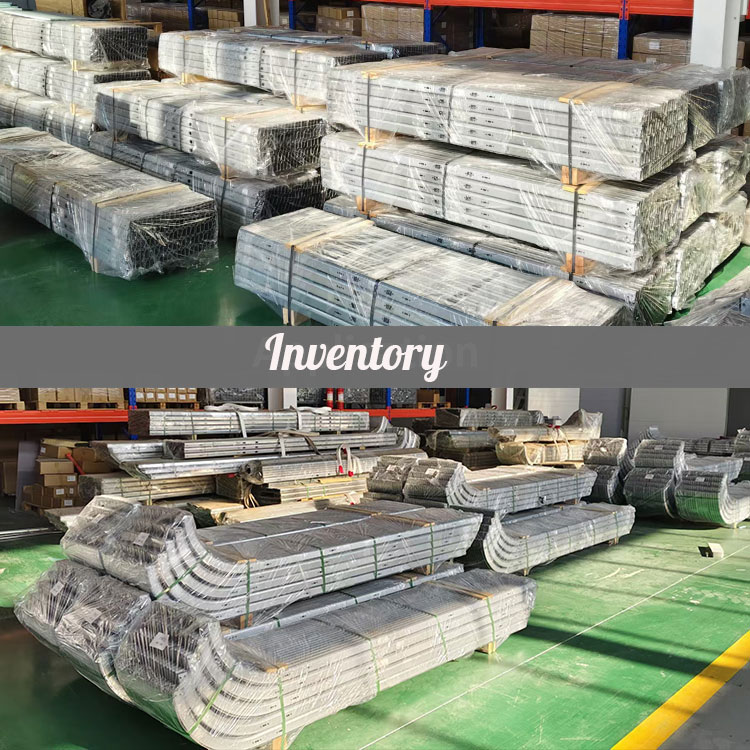
Ruichi propose des kits de rails de porte de garage OEM/ODM complets, adaptés aux applications résidentielles et industrielles. Tous les composants subissent des contrôles qualité stricts certifiés ISO, avec des options d'emballage personnalisées disponibles pour les besoins de vente en gros ou au détail.
Résumé
Choisissez des rails et kits de porte de garage durables pour garantir des performances fiables et sûres pour tous les types de portes.




 French
  English
  Spanish
  Russian