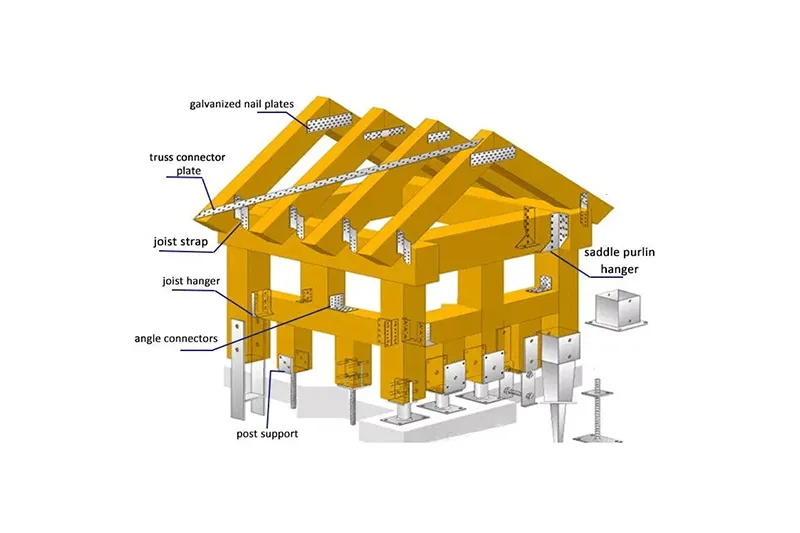
Weak wood connections cause instability, deformation, and safety risks. Poor fixation shortens building lifespan. Using various timber connectors ensures stronger structures and reliable long-term performance.
Timber connectors are essential components used to join and reinforce wooden structures. Different connector types provide specific load support, improve stability, and adapt to various construction requirements. Steel timber connectors, timber truss connector plates, and hidden timber connectors help ensure safe and durable wooden buildings.
Understanding connector types helps optimize wood structure performance and construction efficiency.

What are timber connectors?
Timber connectors are metal components designed to join, reinforce, and stabilize wooden structural elements. They are widely used in timber frame buildings, wooden houses, roof systems, decks, and outdoor structures. The primary purpose of timber connectors is to transfer loads efficiently and create secure joints between timber components.
- Various timber connectors cover brackets, plate connectors, joist hangers, hurricane ties, angle brackets and post anchors. Builders choose different types to fit diverse load directions and installation demands in wood construction.
- Steel timber connectors feature high strength and good corrosion resistance, widely used for projects requiring high durability and load-bearing capacity. Hidden types gain popularity for nice appearance plus reliable structural strength.
- Timber truss connector plates join truss components and optimize roof load distribution. Timber connection fittings and bolt sets help build firmer and more stable connecting joints.
Modern wood construction increasingly depends on these components because they simplify installation and improve structural safety.

What is a structural connector?
A structural connector is a mechanical component used to join building elements while transferring loads safely between them. In wooden buildings, structural connectors create stable links between beams, joists, columns, and roof members.
| Category | Details |
|---|---|
| Basic Attribute | Timber connectors are structural connectors used to reinforce and support wood framing systems. Metal and steel timber connectors are engineered to withstand vertical loads, lateral forces and environmental stress. |
| Common Types | Available in various styles such as angle connectors, timber connector brackets, truss plates and concealed fasteners, matching different load needs and construction designs. |
| Typical Application | Timber truss connector plates connect components in roof truss systems. Hidden timber connectors are preferred for good-looking projects as they are invisible after installation. |
| Quality Importance | Connector quality decides building safety. Inferior products may cause displacement, cracking and structural damage. Galvanized steel and anti-corrosion materials ensure long-term stable performance. |
As noted in Ruichi Hardware’s wood connector product range, components such as joist hangers, nail plates, hurricane ties, angle connectors, post anchors, and truss web supports are widely used in various wooden housing projects and offer strong corrosion resistance and durability.

What are timber connectors used for?
Timber connectors are used to strengthen and secure wooden structures across residential, commercial, and outdoor construction projects. Their applications extend from simple framing work to complex engineered timber systems.
- They are most widely applied to connect timber components, firmly joining beams, columns, joists and rafters, realizing even load distribution and less structural displacement.
- Timber truss connector plates are essential for roof systems, which reinforce truss structures and keep them aligned under load to avoid long-term deformation.
- Timber connector brackets and steel timber framing connectors fit floors, decks, pergolas and outdoor garden buildings. Hidden types keep neat appearance without weakening structural strength.
- Timber joist connector bolt sets are ideal for occasions needing high load-bearing capacity. Common wood connection fittings simplify installation and shorten construction period.
- Correct selection and usage of timber connectors optimize load transmission, boost building stability and prolong overall service life.
Modern prefabricated wooden buildings especially depend on multiple connector styles because different structural areas require different load capacities and installation methods.

What sizes of timber connectors are available?
Timber connectors are available in a wide range of sizes to match different timber dimensions and structural requirements. Connector size selection depends on wood thickness, load conditions, installation position, and project design.
| Classification | Details |
|---|---|
| Small timber connector brackets | Suitable for lightweight structures like fences, pergolas and garden buildings |
| Medium-sized metal timber connectors | Mainly used for joists and beams in residential building frame structures |
| Large steel timber connectors | Applied in heavy-duty scenarios such as roof trusses, multi-storey wooden buildings and commercial timber projects; timber truss connector plates have diverse sizes for different truss structures |
| Hidden timber connectors | Available in various sizes to be installed inside beams and columns without damaging overall aesthetics |
| Timber joist connector bolt sets | Made based on bolt diameters and actual load demands |
| Customized service | Manufacturers offer custom sizes to fit special engineering timber structure demands; Ruichi Hardware can customize materials, surface treatments and sizes, with complete product lines covering joist hangers, nail plates, hurricane ties, angle connectors, post anchors and other wooden building structural fittings |
Selecting the correct connector size ensures proper load distribution and structural safety.

What is the most common connector type?
Among all timber connectors, joist hangers are generally considered the most common connector type in wooden structure construction. They are widely used to support floor joists, roof members, and beam connections.
Joist hangers provide efficient load transfer while simplifying installation. Their versatility makes them suitable for many residential and commercial projects. Metal timber connectors such as angle brackets and post anchors are also frequently used.
Another highly common type is timber truss connector plates. These plates are essential in roof truss manufacturing because they connect timber members quickly and efficiently. Their use significantly improves production efficiency and structural reliability.
Timber connector brackets rank among the most versatile products because they support multiple applications including decking, wall framing, and beam fixation. Hidden timber connectors are increasingly popular in premium construction where aesthetics matter.
Steel connectors for timber framing remain the preferred choice because of their strength and corrosion resistance. Products such as timber plate connectors and timber to timber connectors are also standard components in modern wood construction.

The most common connector ultimately depends on the application, but joist hangers, truss plates, and angle brackets remain the core products used across most wooden structures.Various timber connectors provide strength, stability, and flexibility for wooden buildings. Proper connector selection improves structural safety, simplifies construction, and ensures long-term durability.
Or further questions, please contact [email protected].