
A wall bracket is bought on unit price, approved on a single sample, and judged in the field by something that weighs 20 kg and moves. These are the eight defects that pass a sample check and still fail on the wall — what each one looks like, why it happens, and the line you add to the specification that prevents it.
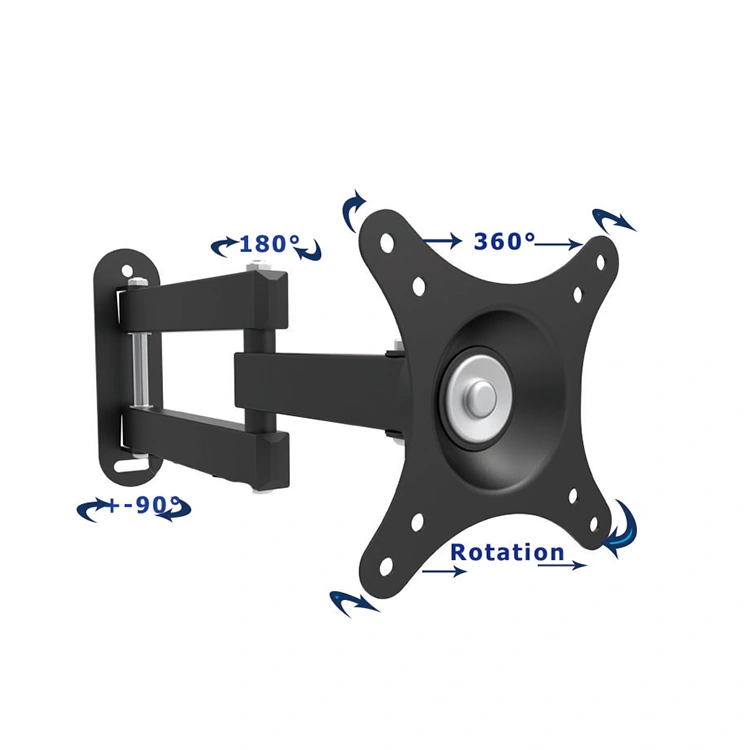
Very few products are bought on unit price and then judged by whether something falls off a wall. A TV wall mount bracket is one of them. Between the purchase order and the complaint sit eight decisions, and not one of them is visible in a photograph or a sample.
A TV wall mount bracket fails in the field for one of two reasons: the load it was designed for is not the load it actually sees, or the part that was approved is not the part that was shipped. Neither shows up on a sample check, because a sample is one unit under one load on one wall. The eight defects below are the gap between those two conditions — and every one of them is cheaper to close in a written specification than in a claim.
This guide is written for the people who place the order: importers, brand owners, distributors and procurement engineers buying TV wall mounts and outdoor AC brackets in volume. Each defect is set out the same way — the symptom you would actually hear about, the cause behind it, and the fix that goes into the specification or the RFQ.
Why a Bracket That Passes the Sample Fails on the Wall
A wall bracket is a short structural chain, and the chain is only as strong as the point where the load changes direction. Follow a screen from front to back and there are five links:
- The screen — its mass, and how far its centre of gravity sits from the wall.
- The VESA plate — four screws into blind bosses moulded into the back of the panel.
- The arm and the pivot — where a vertical load becomes a bending moment.
- The wall plate — where that moment becomes a pull-out force on the top anchors.
- The anchors and the wall — masonry, timber stud, or a plasterboard cavity.
The sample you approve tests one unit at one link, usually the second or the third, on a wall that does not move. The field tests five thousand units at all five links, on a rendered wall in a coastal city, with the arm extended and an installer who has four holes to drill and a spirit level that is 2° out. Nothing in that description is unusual, and nothing in it is the supplier’s fault — which is exactly why the specification has to anticipate it.
A bracket is a formed, welded and coated metal assembly, and every defect in this article is a manufacturing or specification decision rather than a design mystery. That is also why the same eight questions apply whether you are sourcing through an OEM and ODM stamping programme or buying a catalogue part — and why high-volume hardware production is where the difference between a sample and a shipment is decided.
Defect 1: A Load Rating Measured as Dead Weight, Not as Leverage
The symptom. The bracket is labelled 45 kg. The screen weighs 20 kg. Six months later the arm has a visible droop, the wall plate has left a shadow on the plaster, or the top two anchors have started to open the holes they sit in.
The cause. Two different loads are being described with one number. A static rating measures weight hanging straight down from a plate fixed flat to the wall. The moment you add an arm, a swivel joint, or even a tilt mechanism, you have a lever: the same vertical weight now produces a bending moment at the wall plate, and the moment grows in direct proportion to the distance from the wall. Extended 400 mm, a 20 kg screen applies roughly 8 kg m at the pivot and about six to seven times the overturning moment of a flush mount. The top anchors, which were carrying the load in shear, are now carrying it in tension — the direction a wall plug is worst at resisting.
The fix. Ask for the test method, not the number. Four questions settle it: what load, measured how, at what distance from the wall, and was it a single static overload or a repeated cycle test? A supplier who can answer all four has a real rating. A supplier who can only quote a maximum weight has a marketing figure.
| The figure you are given | What it normally describes | What it does not cover |
|---|---|---|
| Maximum load, kg or lb | A vertical load on a plate fixed flat to a test wall, no arm, no extension | The moment created by extension, tilt or swivel; repeated movement; a heavy panel at the top of the size range |
| Screen size range, inches | The VESA pattern and the mass of a typical current panel in that band | An older or commercial panel in the same size band that weighs 40% more |
| “Tested to 4× rated load” | A static overload test at a multiple of the rating, which is the accepted benchmark for fixed and tilt mounts | Cycle life. A joint that holds 4× the weight on day one can still lose its friction in year one |
| “Heavy duty” | Nothing measurable | Everything |
For a fixed mount, a static overload test is a fair proxy. For a full-motion mount it is not — the arm is a lever, and the load it passes into the wall changes every time somebody pulls the screen away from the wall. Ask for a cycle figure as well: a number of extend and swivel cycles at rated load, with a limit on friction loss at the end.
Defect 2: The Steel Gauge That Quietly Changes After the Sample
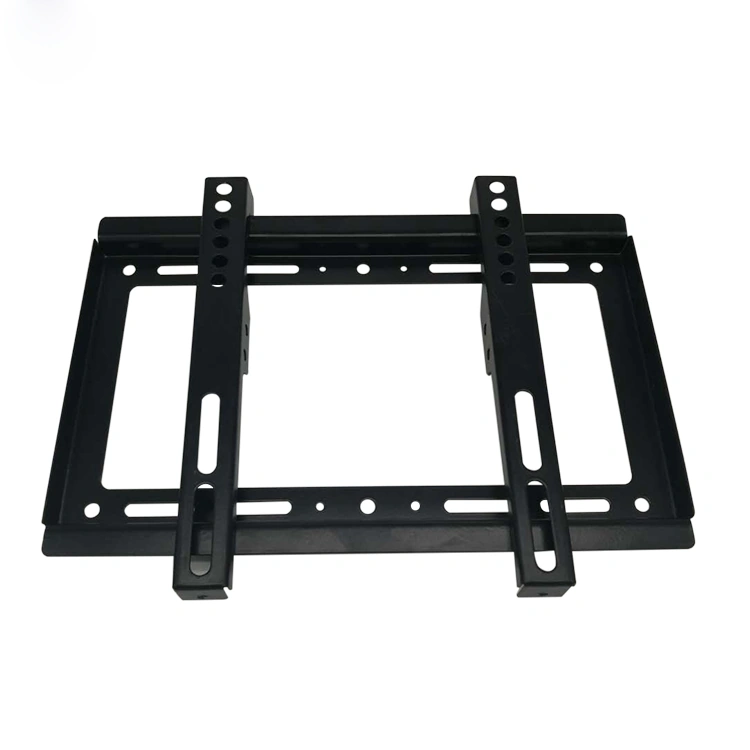
The symptom. The sample bracket felt solid and weighed 640 g. The shipment feels lighter, the arm flexes when you push it, and the carton weight is down. The outside dimensions are identical, so nothing looks wrong.
The cause. Gauge is a cost line, and sheet steel is sold to a mill tolerance rather than to an exact dimension. When a drawing says “2 mm” and nothing else, a supplier can buy 1.5 mm stock that is sold as nominally 1.5 mm and defend the substitution, because the drawing never named a grade, a standard or a thickness tolerance. The same substitution happens with grade: SPCC cold-rolled in place of SGCC zinc-coated, Q195 in place of Q235, or grade 201 stainless described simply as “stainless”.
What a 0.5 mm change actually costs you
The arithmetic is unforgiving because stiffness scales with the cube of thickness. Going from 2.0 mm to 1.5 mm — a 25% reduction that is invisible on a drawing — cuts the bending stiffness of that section by about 58% and its bending strength by about 44%. The bracket still passes a static load test on a bench. It simply stops surviving the case it was bought for: a 400 mm arm, a 25 kg panel, and a customer who pulls the screen out to plug in a cable.
How to pin the gauge down in writing
Four items turn a thickness from an intention into a specification:
- Grade plus standard — SPCC, SGCC, Q235B or 304, named explicitly
- Sheet thickness and the thickness tolerance it is bought to
- Coating designation, including zinc weight for galvanized stock
- A mill certificate or material traceability record with the first shipment
Then verify it the cheapest way available: weigh one bracket from each batch and compare it with the approved sample, and measure the wall plate and the arm with a micrometer at three points along the length rather than with calipers at a cut edge. A 40 g difference on a bracket is the whole story. Our processed material range covers cold-rolled, galvanized, stainless and aluminium stock, which is exactly why the grade has to be named rather than assumed — and why the stamping process is documented stage by stage.
Defect 3: The Weld Sitting in the Load Path
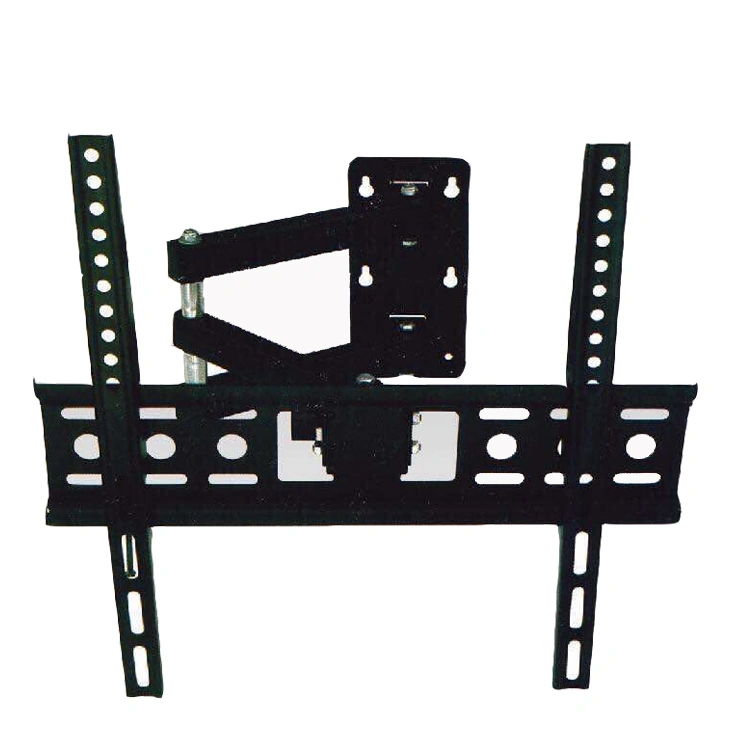
The symptom. The arm separates from the wall plate. Almost always it happens at the toe of a spot weld, months later rather than on day one, and usually on the units that were extended most often.
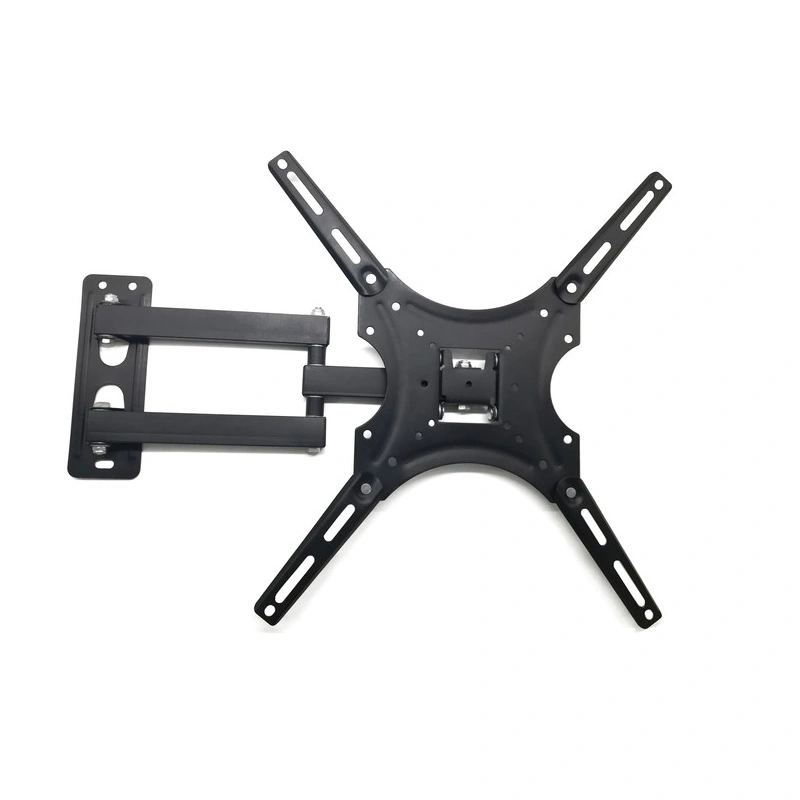
The cause. A stamped bracket should ideally be one piece with no joint anywhere in the load path, and the best designs are exactly that: the wall plate, the arm and the reinforcing flange come out of a single forming sequence. Where a joint is unavoidable — an arm welded to a plate, a gusset welded to an arm, a tube welded to a bracket — a short stitch or a pair of spot welds is a poor choice in tension. Two things go wrong at once. First, the heat-affected zone in thin-gauge steel is the hardest and most brittle material in the assembly. Second, the geometry concentrates stress at the weld toe, which is precisely where a crack starts.
The fix. Put the requirement on the drawing and on the first-article report:
- No joint in the primary load path if the geometry allows a single-piece design
- Full-length fillet or continuous weld on load-bearing joints — not a stitch
- A specified nugget diameter and a minimum number of welds where spot welding is used
- A chisel or peel test on the first article, photographed and recorded
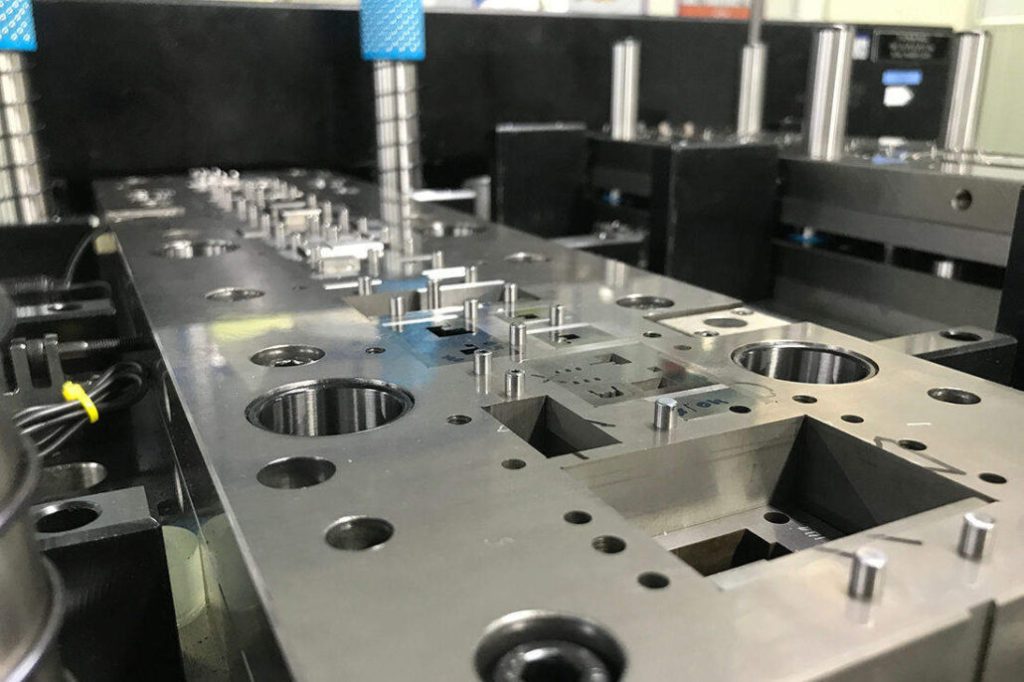
The most useful question to ask a supplier is not “how do you weld it” but “where does the load go”. A supplier who can trace the load path from the VESA plate to the anchors, and show where a weld sits relative to it, is designing a bracket. A supplier who receives the drawing and quotes a price is reproducing one. The tooling and mould design stage is the right place to raise it, because a change to the weld calls for a change to the die.
Defect 4: A VESA Pattern That Fits on Paper and Not on the Panel
The symptom. The listing says “fits 32–65 inch, up to 400×400”. The customer’s 55 inch set arrives and the four holes do not line up. Or they do line up, and the supplied screws bottom out inside the blind bosses cast into the back of the panel.
The cause. VESA FDMI is a family of patterns, not a single standard, and a “up to 400×400” claim often describes the outermost pattern the wall plate can reach rather than the patterns actually drilled. Two further traps sit behind it. Screw length is the first: mounting bosses on consumer panels are blind and typically 10–16 mm deep, so a standard M6×25 or M8×25 screw can bottom out and crack the boss on a thin panel, while the same screw is too short once a spacer is added. Screw size is the second: the pattern's nominal screw diameter is fixed by the standard, and shipping M6 hardware in a kit that is used on 100×100 panels is a guaranteed complaint.
| VESA pattern | Screw | Screens that normally use it | What to confirm |
|---|---|---|---|
| 75×75 / 100×100 | M4 | 13–32 inch | Screw length 10–12 mm. Long screws crack small panels. |
| 200×100 / 200×200 | M6 | 32–55 inch | Both patterns must be drilled, not “reachable”. |
| 400×200 / 400×400 | M8 | 55–75 inch | The plate must reach both without an adapter plate. |
| 600×400 / 800×400 | M8 | 75 inch and above | Check the vertical rail spacing as well as the outer pattern. |
| Adapter plate | mixed | any | Every adapter adds a bolted joint into the load path. |
The fix. Print the patterns you actually drill on the drawing, and treat the size range as a consequence of those patterns rather than the other way round. Then make the screw kit cover the range you claim: M4, M6 and M8 lengths in the 10–25 mm band, a set of spacers, and a printed drilling template. The template costs a few cents and removes the single most common installation complaint in the category — which is also why the inspection and testing process should include a gauge check on every pattern, not a visual one.
Defect 5: Tilt and Swivel Friction That Sags Within a Year
The symptom. The tilt bracket that held its angle in the showroom now points at the floor. The swivel arm that moved with one finger needs two hands and a warning.
The cause. A friction joint holds an angle through bolt preload squeezing two surfaces together. On a low-cost mount those surfaces are bare steel against bare steel, or steel against an unfilled nylon washer. Preload relaxes as the joint beds in, the washer creeps and wears, and the holding force falls. Nothing has broken; the part has simply stopped doing the thing it was bought for. This is the defect that a static overload test cannot find and a cycle test always does.
The fix. Specify the joint, not just the arm:
- A cycle figure — cycles at rated load, with a limit on friction loss at the end
- A bearing washer in filled nylon, brass or bronze rather than unfilled nylon
- A detented or locking tilt joint on panels above roughly 30 kg
- A pivot bolt torque the installer can reach and re-check with a normal wrench
Where the mount will be used in a commercial or hospitality setting — a hotel, a clinic, a classroom — the joint will be adjusted far more often than in a living room, and the friction budget should be sized for that. If the assembly is sheet metal rather than a welded tube frame, the arm itself has to resist twisting as well as bending, which is a sheet metal fabrication question about flange depth and section shape rather than about material.
Defect 6: Wall-Plate Holes That Miss Real Stud Spacing
The symptom. The wall plate is 460 mm wide with the outer holes at 406 mm centres, and the studs in the customer’s wall are at 400 mm. Or the wall is internal plasterboard on light steel studs, and four holes land in a cavity.
The cause. Wall plate geometry is designed for one of several conventions — 16 inch (406 mm) timber framing, 400 mm or 600 mm European framing, or solid masonry — and a single plate cannot serve all of them at once. The bracket itself is very rarely the part that fails. The anchor is, and the anchor's pull-out rating in the customer’s wall is usually an order of magnitude lower than the bracket's capacity. The chain is only as strong as it is at that point.
The fix. Design the plate around the anchor rather than the reverse:
- Slotted holes and two vertical rail positions, so the plate can span a range of stud spacings
- A wall-type call-out in the manual — masonry, timber stud, steel stud, plasterboard
- Anchors supplied for the wall type you name, with their pull-out rating printed on the pack
- An honest statement when a full-motion mount needs a solid substrate, instead of a toggle bolt and a 400 mm arm
A bracket that outlives its anchors is not a good bracket — it is a bracket that moved the failure somewhere less visible. If your packaging ships one anchor type “suitable for all wall types”, the field will decide which wall type that was.
For distributors this is a warranty question more than an engineering one. The instruction sheet is the cheapest quality control you will ever buy, and it is also the document a customer will produce when they claim. Writing “not suitable for plasterboard” costs one line and closes a whole class of claim. Buyers who have been through this before tend to cover it at supplier qualification stage — see choosing a sheet metal supplier for the rest of that list.
Defect 7: Coating That Passes a Visual Check and Fails a Salt Spray
The symptom. The sample is perfect. Units installed 200 m from the coast show blistering along the weld toes at 12 months and red rust at 18. On an outdoor air conditioner bracket, this is not a cosmetic problem — it is the failure mode.
The cause. Three variables, and the visual check measures none of them. The first is pre-treatment: degreasing and conversion coating decide whether the powder sticks to the steel or merely sits on it. The second is film thickness, which is 60–90 µm on a flat face and far thinner over a sheared edge or a weld toe — and the edge is where corrosion always starts. The third is the substrate itself: powder coating over bare steel protects nothing once the film is scratched, whereas powder over galvanized steel is protected by the zinc underneath even after the paint is breached. A supplier who reports film thickness measured on the flat face has told you the least interesting number in the coating.
| Substrate and finish | Zinc protection | Typical salt spray result | Where it belongs |
|---|---|---|---|
| Powder coat over bare steel | none | Fails at the first breach — edges and weld toes first | Indoor, dry, protected |
| Powder coat over electro-galvanized sheet | 5–12 µm | Mid hundreds of hours depending on film and edges | Sheltered outdoor, temperate |
| Powder coat over hot-dip galvanized steel | 45–85 µm | 500 h+ neutral salt spray is a realistic specification | Exposed outdoor, most climates |
| Hot-dip galvanized, unpainted | 45–85 µm | 500 h+ | Outdoor where colour does not matter |
| Grade 304 stainless | n/a | No red rust; may tea-stain in coastal air | Coastal, architectural |
| Grade 316 stainless | n/a | Best available in chloride exposure | Marine and high-chloride sites |
The fix. Specify the layer, not the colour. “Black powder coated” is a description; “hot-dip galvanized substrate, powder coat over a conversion coating, 70 µm minimum on flat faces and no bare edge, no red rust at 500 h neutral salt spray” is a specification that can be inspected and rejected. Add a cross-cut adhesion test for the coating and ask to see thickness readings taken at an edge, not in the middle of a face. Inside about 5 km of salt water the honest answer is galvanized plus powder, or 304 and above — a standard powder coat over cold-rolled steel will fail there regardless of how well it is applied. The full sequence is set out in the surface treatment process, and it is the part of the order most often left unstated.
Defect 8: Cartons, Paperwork and the Parts That Arrive Bent
The symptom. The brackets were perfect at the factory gate. At the destination the arms are bowed, the powder is scuffed white at the corners, and the screw bags have burst into the carton.
The cause. A mount arm is a long, thin, painted cantilever with a flange on one edge. It is strong in the direction it was designed for and weak in the direction a carton gets thrown. Add three more habits and the damage is guaranteed: parts stacked bare against each other, a carton dimensioned for the pallet rather than for the part, and a screw kit loose in the same space as the bracket.
Packaging that survives the last 100 metres
The last 100 metres of a bracket's journey is from the pallet to the customer’s wall, and it is the only part of the trip nobody plans for. Six changes are enough:
- One bracket per bag, with foam or moulded pulp between the arm and the wall plate
- A carton dimensioned to the part — a bracket that can slide 30 mm will arrive bent
- The screw kit in its own compartment, sealed, never loose in the same volume
- Corner protection and an edge board on every pallet layer
- Stretch wrap plus a pre-shipment photograph of the packed pallet
- A carton mark that names the part number and the wall type it suits
The documents that decide who pays for a failure
When a bracket fails in the field, the argument is never about the bracket. It is about evidence. Five documents settle it, and all five should travel with the first shipment rather than being requested afterwards:
- A dimensional report against the toleranced dimensions on the drawing
- The material certificate, tied to a heat or coil number
- Coating thickness readings, including at least one edge reading
- The reference number of the salt spray or adhesion test report for the finish used
- The pivot bolt torque figure, printed on a sheet inside the carton
Documentation is the least glamorous line in a purchase and the one that decides the outcome of a claim. It is also the practical difference between a certificate on a wall and a working ISO-based quality management system: the specification, the sample and the inspection record all traceable to the same order. If the packing needs to be designed rather than improvised, the custom packaging and transport routes are worth agreeing at the same time as the price, because they fail together.
Outdoor AC Brackets: Four Failures a TV Mount Never Sees
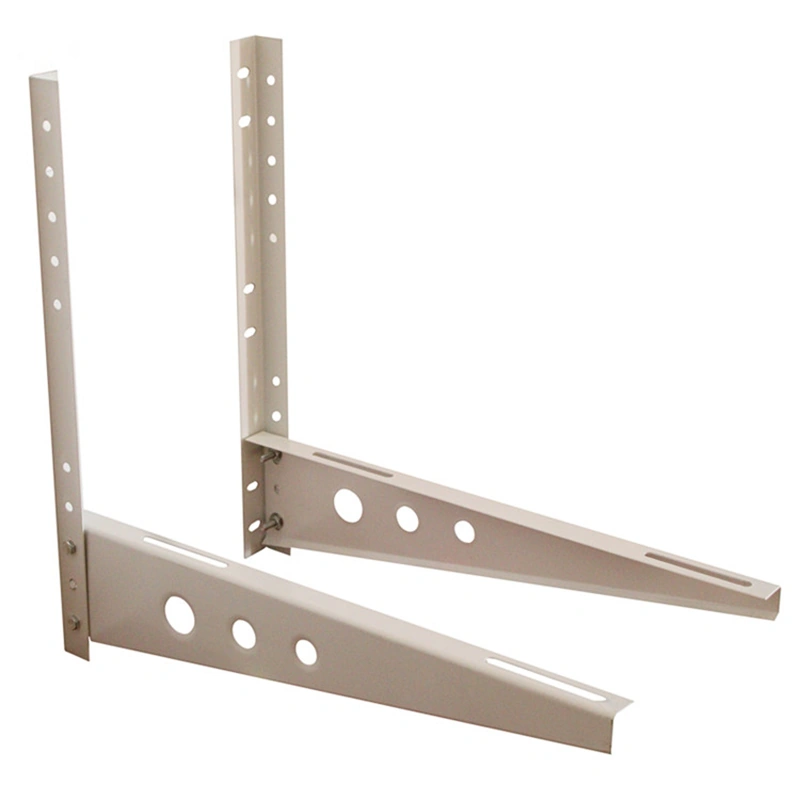
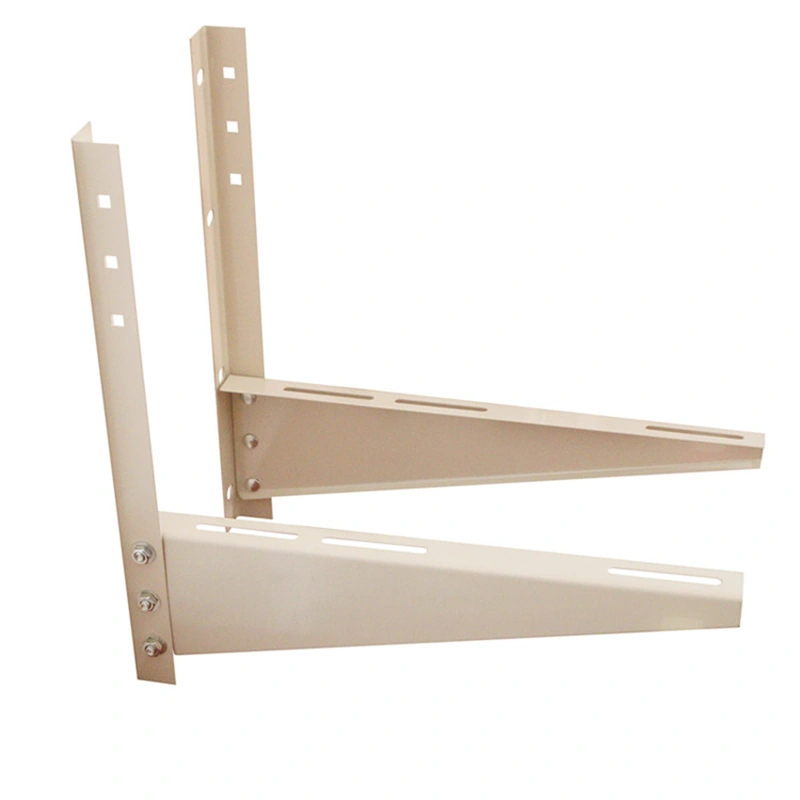
An outdoor air conditioner bracket is a wall mount that lives outside and never stops moving. The eight defects above all apply to it, and four more are added on top. Buyers sourcing air conditioner brackets alongside TV mounts usually discover that the outdoor product needs its own specification, not a thicker version of the indoor one.
1. Compressor vibration, and what it does to a building
A running condenser transmits a low-frequency vibration into the bracket and then into the structure. A bracket that is stiff in the wrong way turns into a sounding board, which is how a routine installation becomes a noise complaint in a multi-unit building. The fix is not a heavier bracket: it is isolation. Rubber pads of roughly 50–60 Shore A at all contact points, and formed ribs in the crossbars to stop the arms drumming.
2. Water and condensate
Condensate drips onto the bracket, runs along it and collects in the lowest formed pocket — and the lowest pocket at the factory is not the lowest pocket once the unit is installed at a different angle. Specify a drainage hole or a slope at the low point of every formed channel, and state the mounting orientation the design assumes, so the drain actually ends up at the bottom.
3. Wind, height, and a load that reverses
The weight of the unit is rarely the governing load. On an exposed facade the wind load on the condenser and the bracket can exceed the static weight, and it pushes as well as pulls. Specify a safe working load of at least three times the unit’s wet weight, and for anything above a few storeys ask for a lateral or back-load figure rather than a vertical one. A bracket that is comfortable in a load test can still be marginal in a storm.
4. Service access, and the anchor underneath
A condenser has to be lifted off and set back, often by one technician on a ladder. That means the unit must be able to slide on the bracket, which means slotted holes that match the foot pattern of the major brands rather than holes drilled for one model. And underneath it all, the anchors need a concrete or structural substrate — M10 or larger expansion anchors, not fixings into render, insulation or hollow block.
Where an HVAC programme includes both the mounting hardware and the duct-side parts, the two are usually sourced together, and the specification habits carry across — the same questions about coating systems, tolerances and test reports decide the outcome on both. The wider HVAC hardware range follows the same approach.
The Pre-Shipment Checklist That Closes All Eight
Every defect in this article is a decision that was never written down. Eight items close the gap, and none of them costs money:
1Ask for the test method, not the number
Rated load, test standard, distance from the wall, static or cyclic. Four answers, or the figure is marketing.
2Pin the gauge and the grade in writing
Grade plus standard, thickness plus thickness tolerance, coating designation, and a mill certificate in the first shipment.
3Keep the weld out of the load path
Prefer a single-piece formed bracket. Where a joint is unavoidable, specify a continuous weld, a nugget size and a chisel test.
4Drill the VESA pattern you quote
Every pattern in the size range, with the right screw size and a screw kit that covers the whole range, plus a drilling template.
5Give the pivot something to hold on to
A friction cycle figure, a filled-nylon or bronze washer, and a detent on tilt joints above 30 kg.
6Design the wall plate around the anchor
Slotted holes and two rail positions, a wall-type call-out, and anchors named for the substrate with their rating on the pack.
7Specify the coating by layer, not by colour
Substrate, pre-treatment, minimum film thickness including at edges, and a salt spray figure with the test standard and an acceptance criterion.
8Pack for the last 100 metres, and document the part
One part per bag, a carton dimensioned to the bracket, and five documents in the first shipment instead of a conversation in month nine.
None of the eight is unusual, and none of them requires a specialist. What they require is a supplier willing to put them in writing before the tooling is cut. That is the difference between a purchase order and a specification — and the practical reason to walk a factory before you place the first order rather than after the first claim.

What to Send With Your RFQ
The quality of a quotation is limited by the quality of the enquiry. For a TV or AC bracket, this is the information that removes the guesswork — and the absence of any one line is what produces the “unexpected” cost later.
| Item | What to include |
|---|---|
| Drawing | 2D PDF with tolerances, plus 3D STEP if available. Sketches with dimensions are enough to start; a photograph is not. |
| Type | Fixed, tilt, single-arm, full-motion, or outdoor condenser bracket. The type decides which defect list applies. |
| VESA and load | The patterns to be drilled, the screw sizes, the screen size range and the heaviest panel you intend to cover. |
| Material | Grade and standard, sheet thickness and thickness tolerance, and whether substitution is permitted. |
| Finish | Substrate, coating process, colour reference, minimum film thickness and the salt spray hours you expect. |
| Wall and anchors | The wall types you will claim, and whether anchors are supplied. Naming the wall type is what lets the supplier design the hole pattern. |
| Volume | Sample quantity, first order quantity and expected annual volume — this decides whether tooling is justified. |
| Inspection and packing | The critical dimensions, the reports you expect with the shipment, and the transit protection you need. |
The most expensive line missing from a bracket RFQ is the heaviest panel in the size range. A range is a promise, and the promise is tested by the heaviest customer in it, not the average.
If the bracket is part of a branded range rather than a catalogue buy, the fastest route is a drawing review before the first quotation: the OEM and ODM service introduction sets out what happens between an enquiry and a production release, which is the part of the process that decides whether the schedule holds.
Frequently Asked Questions
What weight rating should a TV wall mount bracket have for a 65 inch screen?
Do not size it from the screen size — weigh the panel, then add margin for the type of mount. A fixed or tilt bracket is governed by the static weight of the screen plus anything hung on the mount. A full-motion bracket is governed by the same weight at full extension, where the moment on the wall plate is several times higher. As a working rule, take the actual panel weight and look for a mount whose rated capacity is at least double it for fixed mounts and comfortably more for an extending arm, and confirm that the rating was measured with the arm extended rather than flat against the wall.
Is a stronger steel gauge the answer when a bracket flexes?
Sometimes, but flange depth is usually the better lever. Bending stiffness rises with the cube of thickness but with the square of section depth, so adding 10 mm of flange height to a formed arm often does more than moving a whole series up a gauge — and it costs less material. What matters either way is that the thickness and the section are both written into the specification, because a 25% reduction in gauge is invisible on a finished part and removes more than half of the stiffness.
How do I know whether a coating will survive outdoors?
Ask for the substrate, the pre-treatment, the minimum film thickness including a reading taken at an edge, and a neutral salt spray result with the test standard and an acceptance criterion attached. A figure without the standard and the pass condition is not evidence. For installations close to salt water, the substrate matters more than the paint: hot-dip galvanized steel or grade 304 stainless and above, rather than a powder coat over cold-rolled steel.
Should the anchors come with the bracket?
Yes, and they should be named for the wall type rather than sold as universal. The bracket is almost never the weak link in the chain — the anchor is, and its pull-out capacity in the customer’s wall is far below the bracket’s own rating. A kit that ships one anchor type for all walls is effectively passing the decision to the installer, and the installer is not the party who receives the claim.
What is the cheapest way to verify a shipment before it sails?
Weigh the brackets and measure two or three of them. Comparing unit weight against the approved sample catches a gauge substitution immediately, and measuring the wall plate and the arm at three points catches a section change. Neither test needs a laboratory, and together they cover the defect that sample inspection most reliably misses. After that, compare the coating against a retained colour and thickness reference, and check that the documents listed on the order are in the carton that has already been packed for a photograph.
Can one bracket design cover both TV mounts and outdoor AC brackets?
Not sensibly. The loads are different in kind rather than in size: a TV mount is a dry indoor part governed by moment and friction, and a condenser bracket sits in weather, drains condensate, transmits compressor vibration into a structure and has to be removed for service. Some parts — a crossbar, a wall plate, a formed arm — can be shared across the two, and sharing the tooling is a legitimate cost saving. Sharing the finish and the anchor specification is not.
RC Hardware Manufacturer produces TV wall mount brackets, AC condenser brackets and stamped metal mounting components for retail brands, distributors and HVAC programmes. Projects are quoted from a drawing or a sample, and the specification, the sample and the inspection record stay linked to the same order.
Send the Drawing, Not Just the Photo
Whether you are releasing a new TV mount or fixing a return rate on an existing one, the fastest route to a specification you can rely on is a drawing, a sample, or a clear set of requirements.
Send us your drawing, VESA patterns, panel weight, sheet thickness, surface finish, wall types, quantity and target delivery date — and we will come back with a specification note alongside the price.



 English
 Spanish
 French
 Russian
 Portuguese
 German
 Arabic