
One word on a finish callout decides whether the same steel part survives two years or twenty-five. “Galvanized” is not a specification — it is a category that covers five different processes, a ten-fold spread in service life and a three-fold spread in price. The supplier quotes the cheapest one that satisfies the word you wrote.
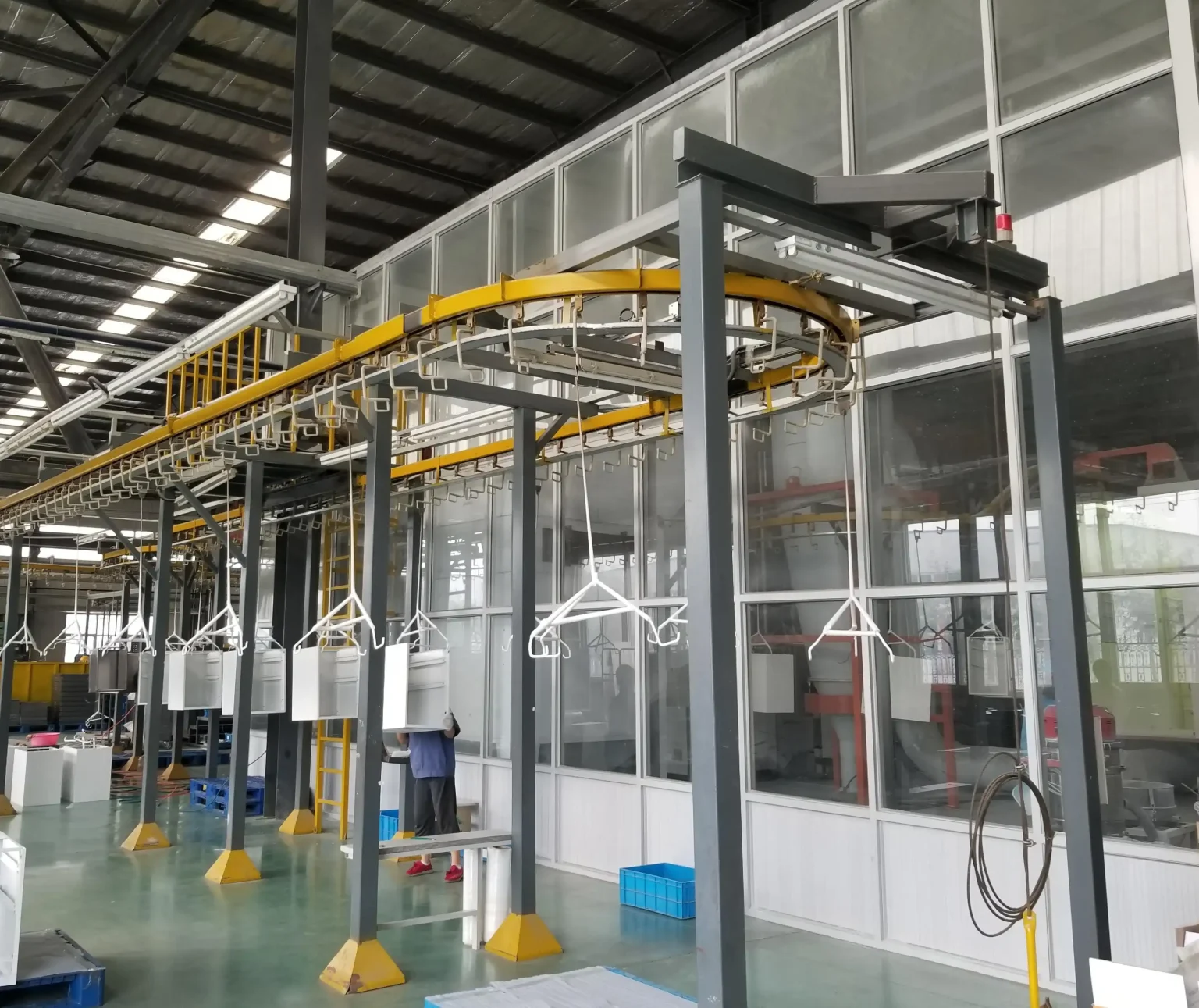
A finish note becomes a specification only when it names the process, the coating thickness in microns, the standard number, the failure criterion for the corrosion test, and the coverage requirement. “Galvanized” names none of those. It is a category that legitimately covers hot-dip galvanizing at 85 µm, electroplated zinc at 8 µm and zinc-flake coatings at 10 µm — three processes whose service lives in the same coastal atmosphere differ by roughly ten times. If your drawing does not choose, your supplier will, and the default choice is always the cheapest bar that satisfies the word. The eight traps below are the gaps that turn a one-line note into an eighteen-month warranty claim.
Corrosion complaints almost never arrive as corrosion complaints. They arrive as a photograph of a rusty bracket attached to an email that says “these were supposed to be galvanized” — and the awkward part is that they were. Something was galvanized. It just was not the thing the buyer thought the word meant.
This guide is written for importers, brand owners, distributors and procurement engineers buying componentes estampados e de chapa metálica in volume, in the atmosphere the parts will actually live in. Every trap is set out the same way — what the coating certificate says, what the site finds two years later, why both can be true, and the one line that goes into the finish note to close the gap for good.
The test that settles most coating arguments in ten seconds: ask your supplier to state the process name, the measured coating thickness in microns, and the standard the thickness was measured against. If all three come back without anyone leaving the room, you have a specification. If the answer is “it is galvanized, it is fine”, you have a word — and the difference only becomes visible in the second year, on a wall you cannot easily reach.
Why “Galvanized” Is a Category, Not a Specification
In English-speaking trade, “galvanized” is used for at least five commercially distinct processes. They share one thing — zinc is involved — and almost nothing else. They are applied in different plants, cost different amounts, produce visibly different surfaces, and protect steel for wildly different lengths of time. A finish note that says only “galvanized” therefore does not specify a coating. It specifies a family, and leaves the member of the family to whoever is quoting.
This is not a translation problem or a supplier problem; it is how the word is used across the entire industry, including in buyer-side documents. The consequence is structural: a supplier competing on price has every commercial reason to select the cheapest member of the family, and Controlo de processos segundo a norma ISO 9001 gives them a perfectly defensible file for doing so, because the file says the part meets “the drawing” — and the drawing said “galvanized”.
The five processes, with the coating thicknesses they normally deliver and what they are actually good for:
| What the word can mean | Typical thickness | Standard | No lugar certo |
|---|---|---|---|
| Hot-dip galvanizing (HDG) | 45–85 µm, set by steel thickness | ISO 1461 / ASTM A123 | Outdoor structural parts, long service life, C4–C5 atmospheres. Heavy, matte grey, dimensionally intrusive. |
| Electroplated zinc | 5–25 µm, typically 8–12 | ISO 2081 / ASTM B633 | Indoor parts, fasteners, decorative hardware, sheltered assemblies. Bright, thin, cheap, short outdoor life. |
| Zinc-flake / zinc-lamellar coating | 6–12 µm | ISO 10683 | High-strength fasteners and spring parts where hydrogen embrittlement is a risk. Grey, matte, no baking cycle. |
| Revestimento em pó | 60–120 µm | ISO 12944 / AAMA 2604 | Appearance-driven parts and enclosures. Excellent colour control, weak edge coverage, needs a prepared substrate. |
| Electrophoretic coating (e-coat) | 15–35 µm | ISO 12944-5 | Complex shapes, welded assemblies and internal cavities. Unequalled coverage, limited colour range, needs UV protection outdoors. |
The practical lesson is that a finish note has to name the process, because the process is what the buyer is actually buying. Everything else — thickness, standard, test method — hangs off that choice, and the choice itself depends on the substrate and material grade underneath it. Get the process right and the rest is arithmetic. Leave it as a category and no amount of incoming inspection will recover the decision, because every member of the family is a legitimate reading of the word you wrote.
The Four Finishes, Ranked by Years of Service

The chart above is not an advertisement for the most expensive option. It is a picture of a decision that most drawings leave unmade. In a C4 atmosphere — a coastal industrial site, which is where a large share of exported hardware ends up — zinc is consumed at roughly three microns per year. At that rate an 8 µm electroplated coating is gone in under three years, while an 85 µm hot-dip coating is still working after twenty-five.
The atmosphere is the number most often left out of the conversation, and it is the one that decides everything. The same bracket specified identically for an indoor warehouse and for a seaside car park needs two different answers, and the drawing is the only place that difference can be recorded. If the enquiry never states the environment, the quote will be built on the cheapest assumption available.
- State the corrosivity category, not the adjective. “Outdoor, marine, within 1 km of the coast” is a specification. “Must not rust” is a hope. ISO 9223 categories C1 to CX translate an environment into a zinc loss rate per year, which is the only number that converts into service life.
- State the required service life in years. Five years and twenty-five years lead to different processes, and the gap in cost is not proportional to the gap in life. Say which one you are buying.
- Remember that galvanizing protects edges by sacrificial action. Zinc corrodes preferentially to protect a cut edge or a drilled hole, which is why a coating that is intact on the flat face can still fail first at the sheared edge. That is a feature, not a defect — but it means edge condition belongs in the finish note.
- Do not compare coatings by thickness alone. 70 µm of powder is not “more protection” than 70 µm of zinc. Different systems fail by different mechanisms; one barrier, one sacrificial, and the outdoor answer is often both.
Trap 1: A Finish Callout That Names a Category

What the certificate says. Zinc coating applied. Adhesion pass. Thickness within specification. Appearance acceptable. Every line is true.
O que o site encontra. Eighteen months after installation, red rust has broken through on the fixing points and along the sheared edges of an outdoor bracket.
Por que é que ambas as afirmações são verdadeiras. The drawing said “galvanized”. The supplier quoted electroplated zinc, which is galvanized in the ordinary trade sense of the word, costs a fraction of hot-dip, and satisfies the note exactly as written. The certificate is honest. The part is legitimate. The eighteen months is the natural outcome of an 8 µm coating in a coastal atmosphere, and nobody in the chain made an error — because nobody made a decision.
This is the single most common finish failure in exported hardware, and it is invisible at the point where it happens, because at the point of shipment the two parts look like plausible variants of the same idea. Bright parts and matte grey parts both read as “coated” to an inspector with a purchase order in hand, and both come with a certificate. The difference only becomes evidence when the coating is consumed — which is why so much of avoiding the wrong supplier turns out to be about the questions asked before the order rather than the inspections run after it.
| What the buyer wrote | What the supplier was free to choose | What the buyer should have written |
|---|---|---|
| “Galvanized” | Any of the five processes in the table above. Under commercial pressure, the cheapest one that satisfies the word. | “Hot-dip galvanized to ISO 1461, 70 µm average minimum.” |
| “Zinc plated” | Electroplated zinc at any of four thickness grades, or a zinc-flake coating that is not electroplating at all. | “Electroplated zinc to ISO 2081, Fe/Zn 12, trivalent passivate.” |
| “Anti-rust treatment” | Anything at all, including a thin oil film that would satisfy the phrase and fail within weeks outdoors. | Name the process, the thickness and the standard. There is no shorter version. |
| “Same as last order” | Whatever the last order actually was — which may itself have been an undocumented substitution. | Put the process and thickness in the drawing so the next order does not depend on memory. |
The fix costs nothing and takes one line. Replace the category word with the process name plus a standard number: “Hot-dip galvanized to ISO 1461.” That single change removes the supplier’s discretion, makes the quotation comparable between vendors, and gives the coating certificate something concrete to be checked against. On an outdoor part it is worth roughly a decade of service life.
Trap 2: No Microns on the Drawing

What the certificate says. Coating thickness conforms to standard. Pass. And it does — to the minimum the standard permits.
O que o site encontra. Some parts still look new after three years. Others from the same batch show white corrosion product on the same day. Same drawing, same supplier, same shipment, ten-fold spread in performance.
Por que é que ambas as afirmações são verdadeiras. Coating thickness standards are written as minimum averages with lower individual limits, not as target values. ISO 1461, for a steel section between 1.5 mm and 3 mm thick, asks for an average of 55 µm and permits individual readings down to 45 µm. A supplier who reads that as “45 µm is acceptable” is not violating the standard. They are reading it precisely. But 45 µm and 85 µm are not variants of the same product — they are different service lives, and the part that was measured at 45 is the one that will be photographed in the complaint.
This is why a coating certificate with a tick next to “thickness” proves less than it appears to. It proves the coating exists and is above the floor. It says nothing about where in the permitted band the shipment actually sits, and the permitted band is wide enough to matter. Thickness also varies across a single part: it builds up on edges and high points and thins in recesses, so one reading is not a measurement of the part, it is a measurement of the spot.
- Write a floor, not a standard. “70 µm average minimum, no individual reading below 55 µm” is a specification. “Per ISO 1461” is a reference that lets the supplier work to the bottom of the range.
- Write the measuring method. Magnetic induction to ISO 2178 or ISO 1463 is the normal method for zinc on steel. Naming it stops a visual inspection from standing in for a measurement.
- Write how many readings and where. Typically five readings on a defined area, away from edges, on a defined face. Without a stated sampling plan, one convenient reading becomes the reported value.
- Send a boundary sample. A physical part at the low end of what you will accept removes more ambiguity than a paragraph. Both sides then measure the same object rather than the same sentence.
- Check the certificate is measured, not declared. A coating certificate that reports a nominal figure with no instrument reading is a statement of intent. Ask for the reading and the method behind it.
Why this matters more than it sounds. Coating thickness is the single variable that sets service life, and it is the one variable a standard lets a supplier reduce without leaving the specification. If your drawing does not state a floor, the cheapest compliant shipment is also the shortest-lived one — and it will pass every incoming inspection you can design.
Trap 3: Salt Spray Hours With No Failure Criterion
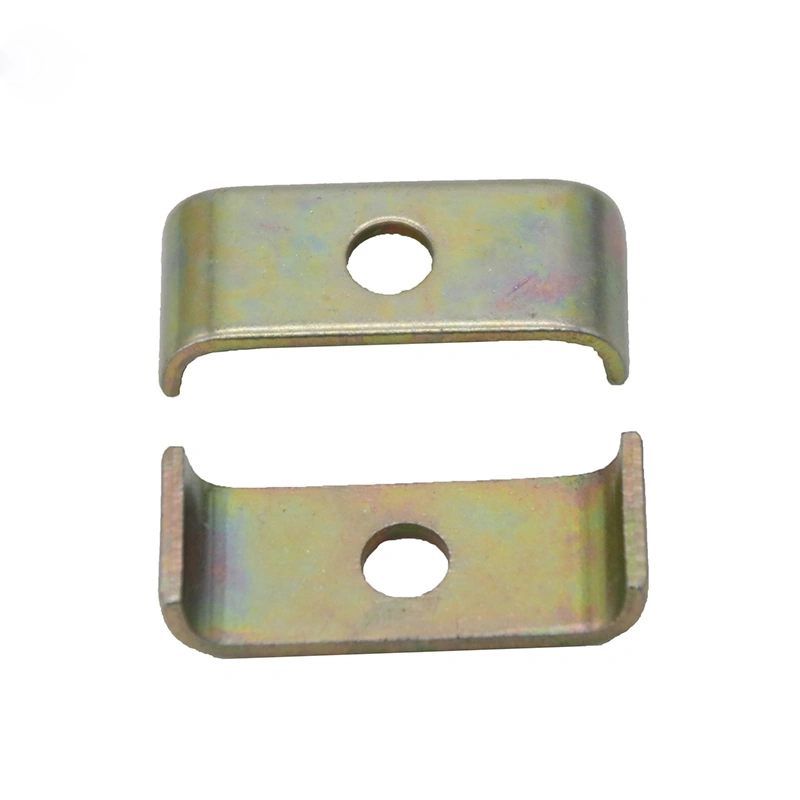
What the certificate says. Neutral salt spray, 96 hours, no failure. Signed, dated, attached to the shipment.
O que o site encontra. White corrosion product within the first year, on parts whose certificate clearly stated a pass.
Por que é que ambas as afirmações são verdadeiras. The test was performed and the parts did not fail — because “failure” was never defined. On a zinc coating there are two distinct corrosion products and only one of them matters. White rust is zinc oxide and hydroxide: it is the coating being consumed, which is the coating doing its job, and it is cosmetically alarming but structurally harmless. Red rust is iron oxide: the coating is gone and the steel is now corroding. A report that says “96 hours, no failure” is therefore not describing the coating; it is describing whichever of the two the inspector was watching for.
The second half of the problem is the number itself. Salt spray hours are widely treated as a currency — buyers ask for more, suppliers quote against it — but ASTM B117 is a comparative screening test, not a service-life prediction. The correlation between hours in a salt fog chamber and years on a wall is weak, non-linear and different for every coating chemistry. A test that is useful for comparing two candidate coatings becomes actively misleading when it is treated as a warranty.
| What the report says | What it does not say | O que escrever em vez disso |
|---|---|---|
| “96 h salt spray, pass” | Whether the pass means no white rust, no red rust, or only that nobody looked closely. Those are three different coatings. | “ASTM B117. Failure = any red rust, or white rust exceeding 5% of area, or scribe creep beyond 2 mm on either side.” |
| “No failure” | Where on the part the observation was made. Edges, scribes and recesses fail first and are exactly what the buyer will look at. | Name the inspection faces, the magnification and the rating scale (ISO 4628 for blistering, rusting and cracking). |
| “1000 h” compared against “500 h” | That the two figures came from the same coating chemistry. Hours from different systems are not directly comparable. | Compare like for like, and treat hours as a screening result rather than a service-life claim. |
| “Pass” on a submitted sample | Whether the sample is representative of the production run. A hand-dipped sample and a production line part are different objects. | Require the test to be run on production parts, from the actual process, and re-run if the process changes. |
Write the failure, not the duration. A salt spray requirement with a defined failure criterion is a specification your supplier can be held to and your own QC can re-run. A duration on its own is a number that gets copied from the last enquiry, quoted against, and quietly reinterpreted when the parts come back.
Trap 4: Coverage You Never Specified

What the certificate says. Coating thickness 78 µm. Meets specification. Adhesion pass. Cross-hatch test clean.
O que o site encontra. The visible faces are flawless after four years. The first rust appears at a folded internal corner, inside a drainage channel, and on a sheared edge that was never coated at all.
Por que é que ambas as afirmações são verdadeiras. Every reading on the certificate was taken on a flat, accessible face — because that is where a gauge can reach, and because that is where the coating is thickest and most flattering. Powder coating is applied electrostatically, and a charged powder cloud cannot reach into a shielded recess: the part’s own geometry forms a Faraday cage around its internal corners. The coating that ends up 78 µm on the face may be 20 µm in the recess, or absent on a sheared edge that was never in the spray pattern at all.
This matters most on the parts least likely to be inspected, because the failure is internal and slow. A welded assembly, a folded channel or a stamped enclosure can corrode from the inside out while every accessible surface reads as perfect. By the time the problem is visible, the corrosion has already been running for a year, and the certificate will be produced in the meeting to demonstrate that the coating was correct.
- Say which surfaces must be coated. “All surfaces, including sheared edges, internal corners and threaded holes” is a requirement. Silence means the accessible faces, because that is what a thickness gauge measures.
- Name the coverage-critical features. If a drainage channel, an internal cavity or a weld seam has to survive, say so. The supplier can then choose a process that reaches it — dip-applied e-coat rather than sprayed powder, for example.
- Accept that some processes cannot reach everywhere. Sprayed powder is a line-of-sight process. If the geometry is complex, the honest answer is a different process, not a request for the spray gun to try harder.
- Consider a two-layer system for the difficult geometry. E-coat reaches where powder cannot, because the part is immersed rather than sprayed. An e-coat primer under a powder topcoat covers the cavities and still gives an outdoor-grade appearance — see Trap 7.
- Do not accept an edge-coverage claim on a bare cut edge. A sheared edge has no coating unless the process deposits one. On a galvanized part the zinc protects that edge sacrificially; on a painted part there is nothing there, and the edge is where the failure will begin.
Ask where the thickness was measured. A coating report is only as good as the location of its readings. If every reading sits on a flat outer face, the report describes the easiest surface on the part. Ask for readings in the recess, at the fold and on the edge — the places the part will actually fail from.
Trap 5: The Coating That Eats Your Tolerance

What the certificate says. All dimensions within drawing tolerance. Measured before coating, signed, shipped.
O que a linha deteta. The locating pin will not enter the hole. The thread will not accept the bolt. A part that measured perfectly has become an interference fit.
Por que é que ambas as afirmações são verdadeiras. The measurements were taken on the uncoated part, and a coating is additive. On a 1.5 mm bracket with a 20 µm e-coat primer under an 80 µm powder topcoat, the finished thickness is 1.5 mm + 2 × 0.1 mm. Every external dimension has grown by 0.2 mm, every hole has shrunk by the same amount, and on a part whose entire tolerance band is 0.2 mm the coating alone has consumed it. Nothing is out of tolerance in the workshop. Everything is out of tolerance on the finished part.
This is easy to miss because the two decisions are made by different people at different times. The designer sets the tolerance from the assembly requirement; the finish engineer selects the process from the corrosion requirement; and nobody adds the two together. The mistake is silent until assembly, because the first article report and the workshop inspection both describe a part that no longer exists once the coating line has finished with it.
| Acabamento | Typical film on one face | Effect on a hole | Where it hurts |
|---|---|---|---|
| Electroplated zinc | 8–12 µm | −0.016 to −0.024 mm on diameter | Precision fits, small threads, press-fit pins. Often manageable, but must be stated. |
| Zinc-flake coating | 6–12 µm | −0.012 to −0.024 mm on diameter | Fasteners and threaded parts, where the thread pitch does not absorb the growth. |
| E-coat | 15–35 µm | −0.03 to −0.07 mm on diameter | Every surface is coated, including internal bores that were dimensioned to be bare. |
| Powder coat | 60–120 µm | −0.12 to −0.24 mm on diameter | The dominant cause of oversized parts. Any hole under 8 mm will close noticeably. |
| E-coat + powder (two-layer) | 75–155 µm | −0.15 to −0.31 mm on diameter | The best corrosion answer and the worst dimensional answer. Needs design allowance. |
- Mark which dimensions apply before coating and which after. “Final dimensions apply after coating” is a sentence that saves an assembly line. Without it, the drawing is ambiguous and the workshop will measure the part it can hold.
- Give the coating its allowance in the design. If a 0.2 mm film is expected, the nominal hole should be opened by 0.4 mm on diameter. That is a design decision, not a finishing one, and it has to happen before the tool is cut.
- Mask and re-tap the threads. Threads are the most common casualty. The standard answer is to mask before coating and re-tap afterwards, or to specify the thread class on the finished part — 6H after coating, not before.
- Beware thin walls. A 0.2 mm film on each face of a 1 mm wall is a 40% change in section stiffness, and it can close small slots completely. If the design has narrow gaps, the coating is a dimensional event.
- Do the arithmetic once, in the DFM review. Adding the film thickness to the critical dimensions takes five minutes while the part is a drawing and prevents a tooling change once it is a die. This is exactly what a mold and tooling review should be catching before steel is cut.
Coating thickness is a dimension. It is the only dimension on the drawing that nobody draws, nobody tolerances, and everybody measures with a gauge calibrated in microns rather than millimetres. Write it down, add it twice, and put the note on the drawing: “Dimensions shown are final, after coating.”
Trap 6: Hydrogen Embrittlement After Plating
What the certificate says. Mechanical properties conform. Tensile and hardness within specification. Plating thickness within specification. A clean report with nothing to query.
O que a linha deteta. A high-strength bolt shears under the heads during assembly. Occasionally a part cracks in storage, weeks after delivery, with no load applied at all.
Por que é que ambas as afirmações são verdadeiras. Electrodeposition generates hydrogen at the steel surface, and some of it diffuses into the metal rather than escaping. In a hardened or spring-tempered part, that absorbed hydrogen concentrates at stress raisers and can cause delayed brittle fracture — a failure that happens hours or days after the part has passed every test it was given. The plating certificate is accurate: there was nothing wrong with the coating. The problem is what the coating process did to the substrate, and no plating inspection looks at that.
The requirement is well established and easy to state: parts of property class 10.9 and above, or with a hardness above roughly 320 HV, must be baked after plating to drive the hydrogen out — typically within four hours of plating, at 190–230 °C for at least four hours, per ISO 4042. If the drawing does not ask for it, the baking step is an unbilled extra that a supplier under cost pressure has a strong reason to skip, and skipping it produces no defect that any routine test would find.
- State the requirement by property class, not by part name. “All parts of property class 10.9 and above, or hardness exceeding 320 HV, shall be baked within 4 hours of plating at 190–230 °C for 4 hours minimum” is auditable. “Suitable for high-strength fasteners” is not.
- Ask for the baking record, not just the plating certificate. The time between plating and baking is the variable that matters, and it only exists in a process record.
- Consider a process that avoids the problem entirely. Zinc-flake coatings (ISO 10683) apply zinc without electrodeposition and therefore without introducing hydrogen, which is why they are the default answer for high-strength fasteners in automotive and structural work.
- Do not plate then bend or form. A coating applied before a forming operation, or a part plated and then straightened, concentrates risk at the deformation. Sequence the process so plating is last.
- Treat an unexplained brittle failure as a process question first. When a hardened part fractures with no visible cause, hydrogen is the first hypothesis, not the last. It is also the cheapest thing to eliminate from the specification, because the fix is a line of text and a process record.
This is the trap with the worst ratio of consequence to visibility. Nothing on an inspection report can reveal it, the parts pass every test, and the failure tends to arrive during assembly or in a customer’s hands. The entire defence is a sentence in the finish note and a record of the baking time — both of which are free to add and impossible to add after the fact.
Trap 7: One Layer Where the Job Needs Two
What the certificate says. Coating meets specification on thickness, adhesion, impact and salt spray. Every individual test passes.
O que o site encontra. After three summers the parts are not rusty — they are chalky, faded and patchy. The coating is still there. It has simply stopped being a coating.
Por que é que ambas as afirmações são verdadeiras. Different coating chemistries fail by different mechanisms, and the certificate only tests for corrosion. An epoxy-based coating — including many e-coats — is excellent at excluding water and oxygen and poor at surviving ultraviolet light. Exposed to sun, the binder degrades, the surface chalks, the colour drifts, and micro-cracks eventually give water a path to the steel. Nothing in a salt spray chamber tests for that, because there is no sunlight in it. A test regime that only measures corrosion will certify a coating that is about to fail for a completely different reason.
The outdoor answer for demanding environments is usually not a better single layer but two layers doing two jobs: an e-coat primer that is applied by immersion and therefore reaches every surface including the internal cavities, under a polyester or fluoropolymer powder topcoat that carries the colour and absorbs the ultraviolet light. This is the system logic behind ISO 12944-5 durability classes, and it exists precisely because no single coating optimises for both coverage and weatherability at once.
| Single-layer option | What it does well | How it fails outdoors | Two-layer alternative |
|---|---|---|---|
| Epoxy e-coat only | Total coverage of complex geometry, excellent barrier protection, thin and dimensionally friendly. | Chalks and fades within one to three years of direct sun; colour retention is poor and micro-cracking follows. | Keep the e-coat as the primer and add a UV-stable topcoat over it. |
| Polyester powder only | Good colour stability, good UV resistance, tough and repairable-looking surface. | Thin or absent coverage in recesses and on cut edges; corrosion starts internally where nothing was sprayed. | Apply over a conductive e-coat primer, or specify a zinc-rich pretreatment for the substrate. |
| Polyester powder over bare steel | Cheapest appearance-grade finish; perfectly acceptable for a sheltered indoor part. | A single scratch or a sheared edge goes straight to bright steel, and corrosion spreads under the film from that point. | Add a pretreatment or a zinc-rich primer wherever the part will see weather or abrasion. |
| Hot-dip galvanizing only | Sacrificial protection that defends cut edges and survives mechanical damage; outstanding service life. | Heavy, matte and dimensionally intrusive; not acceptable where appearance is part of the product. | Galvanize for the corrosion requirement and powder coat over it for appearance, if the substrate is prepared correctly. |
Test for the failure mode you actually expect. A salt spray result tells you about corrosion. It tells you nothing about ultraviolet degradation, colour retention, chalking, or adhesion after thermal cycling. If the part lives outdoors in sunlight, the specification needs a weathering test — typically a QUV or xenon-arc exposure with a stated gloss and colour-retention limit — alongside the corrosion test. A system that passes one and was never tested for the other is a system with an unmeasured failure mode.
Trap 8: No Standard, So No Failure
What the certificate says. Coating applied. Appearance good. Meets requirement.
O que o site encontra. Nobody can say what went wrong, because there is no test that defines what “wrong” looks like. The conversation becomes a matter of opinion, and the opinion with the larger order book tends to prevail.
Por que é que ambas as afirmações são verdadeiras. A finish note that does not reference a standard cannot be violated. Adhesion, impact resistance, flexibility, hardness and colour retention all have well-established test methods — ISO 2409 for cross-cut adhesion, ISO 6272 for impact, ISO 1519 for bend flexibility, ISO 4628 for rating the extent of blistering, rusting and cracking — and a specification that names none of them is not a weak specification, it is an absent one. The supplier has not avoided a requirement; there was no requirement to avoid.
The commercial consequence is a dispute that cannot be settled by evidence. Without agreed test methods — the same ones a properly equipped testing and inspection department already runs for dimensions — and without an agreed sampling plan, both parties can be entirely honest and reach opposite conclusions, because they are describing different observations of the same part. Add a stated AQL per ISO 2859-1 and the argument converts into a measurement: a defined sample size, a defined number of permitted defects, and a pass or fail that does not depend on who is holding the part.
- Reference the standard, not the adjective. “Coating to ISO 12944-5, system class C4-H” is checkable. “High quality finish” is a preference.
- Name the test methods for the properties you care about. Adhesion (ISO 2409), impact (ISO 6272), bend (ISO 1519), thickness (ISO 2178), salt spray (ASTM B117) and appearance rating (ISO 4628) between them cover almost every real complaint.
- Agree a sampling plan. An AQL per ISO 2859-1 turns “we think these are not right” into a number. Without it, inspection is a matter of how many parts someone happened to pick up.
- Put the cosmetic standard in writing. Colour target, gloss range, and which surface is the visible face. “A-class surface” means different things to different factories unless it is defined.
- Keep the standard on the drawing, not in an email. A requirement that lives in a message thread is lost at the first change of staff. Finish requirements belong in the same place as dimensions — which is the drawing the purchase order references.
An unstated requirement is not a lenient requirement. It is a requirement that gets decided later, by whoever is holding the parts at the time, on grounds that have nothing to do with the product. Naming a standard and a sampling plan is what makes a finish specification survive contact with a real shipment — and, when something does go wrong, what makes the conversation about the parts instead of about the relationship.
The Five-Line Finish Callout to Paste Into Your RFQ
Every trap above closes with the same kind of edit, and the whole set fits into five lines that can go on any drawing or enquiry. It costs nothing to add, it removes the supplier’s discretion on all five decisions at once, and it makes two competing quotations genuinely comparable — which is where most of the money is actually saved.
| Linha | O que escrever | O que abrange |
|---|---|---|
| 1. Process | “Hot-dip galvanized to ISO 1461” — or the specific process you have chosen, named explicitly. | Trap 1. Removes the category and with it the ten-fold spread in service life. |
| 2. Thickness | “70 µm average minimum, no individual reading below 55 µm, measured by magnetic induction to ISO 2178, five readings per area.” | Trap 2. Replaces a reference to the bottom of a range with a floor you chose. |
| 3. Coverage | “All surfaces to be coated, including sheared edges and internal corners. Threads masked and re-tapped to 6H after coating. Dimensions shown are final, after coating.” | Traps 4 and 5. States where the coating must reach, and gives it a dimensional allowance on paper. |
| 4. Corrosion test | “Neutral salt spray to ASTM B117, 720 h. Failure = any red rust, white rust exceeding 5% of area, or scribe creep beyond 2 mm either side.” | Trap 3. Turns a number into a pass/fail criterion both sides can reproduce. |
| 5. Appearance and acceptance | “Free from runs, drips, bare patches and mechanical damage. Colour per approved sample. AQL 1.0 to ISO 2859-1.” | Trap 8. Gives the finish a standard, a sample and a sampling plan, so acceptance is a measurement. |
Two further lines are worth adding depending on the application. Where the part is high-strength, brittle or spring-tempered, add the baking requirement from Trap 6. Where the part is a complex assembly or a welded fabrication, add a coverage-critical first-article requirement — a cut-up section, photographed, showing the coating thickness at the recess and at the weld, not just on the outer face.
None of this is exotic. Every standard referenced is decades old, every test method is routine, and a competent finisher already has the equipment. The only thing that changes is that the decision stops being deferred to whoever quotes last — which is the whole point of writing a specification. A finish note that a supplier can read and a QC department can audit is what separates a cost from a claim.
O que enviar juntamente com o pedido de informação
The finish note is necessary but not sufficient. A supplier quoting a coating needs to know what environment the part will live in, because that is the input that decides which process is defensible. Providing the following with the enquiry produces a comparable quotation in one pass instead of a cycle of assumptions, in the same way a complete engineering brief accelerates a tooling decision.
| O que enviar | Por que é que isso altera o orçamento? |
|---|---|
| The service environment, by category | Indoor dry, outdoor rural, coastal, industrial or swimming-pool atmosphere each map to a different ISO 9223 class, and each class changes the recommended system. Without it, the supplier prices the cheapest assumption — usually indoor. |
| The expected service life in years | A five-year expectation and a twenty-five-year expectation can lead to a five-fold price difference. Stating which one you are buying prevents both overspecification and an unpleasant second year. |
| Whether appearance is functional or cosmetic | A part that will be seen by an end user needs colour, gloss and durability requirements. A part that will be hidden behind a panel does not — and paying for appearance-grade finish on a hidden part is one of the easiest costs to remove. |
| The critical dimensions and how coating affects them | Holes, threads, press-fits and locating features need to be identified before the coating allowance is calculated. This is a five-minute review that prevents a tooling change. |
| The substrate and its surface condition, including weld seams | Coating performance depends on what is underneath. Mill scale, rust, oil and welding spatter all degrade adhesion, and welded assemblies need to be specified as assemblies rather than as parts. |
| How the parts will be packed and shipped | Coated parts are vulnerable to handling damage and to rubbing in transit. Damage that happens after the coating line is not a coating defect, and the packaging specification is what stops it becoming an argument — see embalagem personalizada e transport protection. |
Ask for a first-article coating report, not just a certificate of conformity. The useful document names the process, the measured thickness at defined locations including a recess and an edge, the standard each figure was measured against, and the test results with their failure criteria. A certificate that says “coating applied” cannot be compared with a quotation that says the same thing, and it cannot be used in a conversation two years later when the parts are on a wall.
Perguntas frequentes
Should we specify hot-dip galvanizing or electroplated zinc?
It depends entirely on the atmosphere and the geometry, and it is a process decision rather than a quality decision — both are legitimate finishes. Hot-dip galvanizing delivers 45–85 µm and is the correct answer for outdoor structural parts in C4 or C5 environments, at the cost of a matte grey appearance and a dimensional change that has to be designed for. Electroplated zinc delivers 5–25 µm, keeps dimensions close to nominal, and is the right answer for sheltered indoor parts, fasteners and decorative hardware. The failure only happens when the drawing says “galvanized” and leaves the two to be chosen by whoever is quoting.
How many salt spray hours should we ask for?
Ask for fewer hours with a defined failure criterion rather than more hours without one. A test that states 720 hours with “failure = any red rust or scribe creep beyond 2 mm” is a specification you can audit; a test that states 1000 hours without saying what counts as failure is a number that cannot be interpreted. Treat hours as a screening comparison between two candidate coatings, not as a service-life prediction — the correlation between hours in a salt fog chamber and years on a wall is weak, and it differs between coating chemistries. For a long-life outdoor part, state the ISO 12944 system class and the expected service life as well.
Can powder coat be applied over galvanized steel?
Yes, and the combination is one of the most durable answers available for outdoor hardware — but it has to be specified properly, because the two processes interact. Freshly galvanized steel needs to weather or be treated before coating so that the surface is stable enough to accept adhesion, and the galvanizing must be free of passivation that would interfere with the bond. Outgassing from the zinc during the cure cycle can cause pinholes if the film is applied too quickly. The result, done correctly, is a sacrificial zinc layer under a UV-stable barrier layer — the corrosion protection defends the cut edges, and the powder carries the appearance. Done carelessly it produces blistering and delamination, which is why this belongs in a specification rather than in an instruction to “do both”.
Why did our galvanized parts rust first at the welds?
Because welding changes the surface locally, and the coating process has to cope with that. Hot-dip galvanizing an assembly after welding is the robust route — the zinc covers the seam as well as the parent metal. If a welded assembly is coated by a line-of-sight process after fabrication, a weld seam is one of the easiest places for coverage to be missing or thin, and welding spatter and oxide make adhesion worse. Where the assembly cannot be galvanized after welding and the joint has to be protected, the finish note needs to say how: a zinc-rich repair coating applied to the affected zone, or a change to the process sequence so that coating happens last.
Is a thicker coating always better?
No — thicker is better for corrosion and worse for everything dimensional. A heavier coating consumes more of the tolerance band on every external dimension and closes every hole and thread a little further, and beyond a certain point it also becomes more brittle and more prone to chipping on impact. The productive approach is to choose the thinnest system that meets the service-life requirement for the stated environment, then give that system its dimensional allowance in the design. Specifying a heavy coating on a part with tight fits, or simply asking for “more coating” without saying what the coating is for, usually produces a part that survives the weather and will not assemble.
What single change to a drawing gives the biggest improvement in service life?
Replacing the category word with the process name and a coating thickness. Changing “galvanized” to “hot-dip galvanized to ISO 1461, 70 µm average minimum” typically moves a part from the equivalent of two or three years in a coastal atmosphere to well over twenty, and it costs one line of text. It also makes competing quotations comparable for the first time, because every supplier is now pricing the same process instead of choosing their own member of the same family. If you make one edit to your finish notes this year, make that one.
Send the Part, the Environment and the Service Life
Whether you are releasing a new component or tracing a corrosion complaint back to a finish note that never named a process, the fastest route to a coating specification you can defend is a review against the real environment, before the parts are made.
Send us the drawing or sample, the material and the atmosphere the part will live in, the service life you are targeting and the annual volume — and we will come back with a named process, a coating thickness, the applicable standards and a price for each option.



 Portuguese
 English
 Spanish
 French
 Russian
 German
 Arabic