
Poor rainwater control causes leaks, foundation damage, and costly repairs. Water accumulation worsens structural issues. Installing a rainwater drainage system protects homes and improves durability.
A rainwater drainage system is essential for directing roof runoff away from buildings. Components such as aluminum gutter systems, downspouts, gutter guards, and drainage accessories improve water management, reduce maintenance, and protect residential structures from long-term water damage.
Understanding the system helps homeowners make better installation decisions.

What components form the rain drainage system?
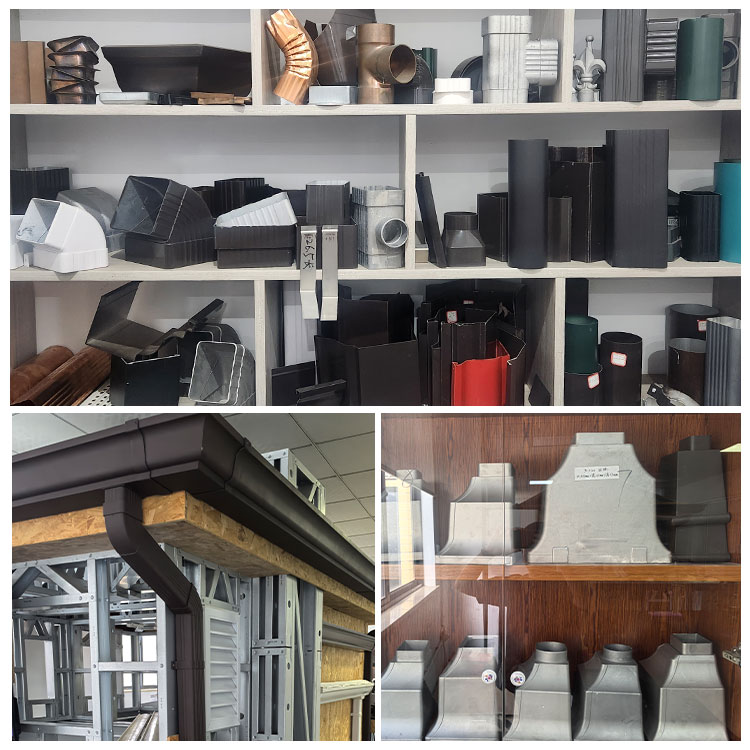
A high-performance rainwater gutter system relies on a complete set of matched functional accessories to realize stable rainwater collection, smooth diversion, and standardized discharge. While seamless aluminum gutters serve as the main body of the system with lightweight, anti-corrosion and leak-proof advantages, a full range of supporting accessories is the key to optimizing system stability, adapting to diverse installation scenarios, reducing maintenance costs and extending service life.
- Gutter hanger is the core fixing component of the entire gutter system.With strong load-bearing capacity and weather resistance, it can stably support the weight of the gutter itself and the instantaneous pressure of rainwater during heavy rainfall. It effectively prevents the gutter from sagging, deforming or falling off after long-term use, avoids water accumulation and leakage caused by uneven gutter inclination, and maintains the overall flatness and stable drainage gradient of the gutter system all year round.

- End caps installed at the two terminal ends of open gutters. They perfectly block the end openings of the gutters to completely prevent rainwater from splashing or leaking out from the gutter ends. Meanwhile, they can block external fallen leaves, dust, debris and small impurities from entering the gutter pipeline from the ends, reducing internal blockage risks, keeping the gutter interior clean, and laying a foundation for unobstructed rainwater circulation.

- Corners of the gutter are special connecting parts adapted to the corner turning positions of building roofs. They precisely connect straight gutter sections at right angles or customized turning angles, realizing seamless transition of the gutter system at building corners. They eliminate the water leakage hidden dangers of traditional butt-jointed turning structures, ensure that rainwater can smoothly turn and flow along the preset track without stagnation, and perfectly fit the architectural contour to make the overall layout of the drainage system more regular and standardized.

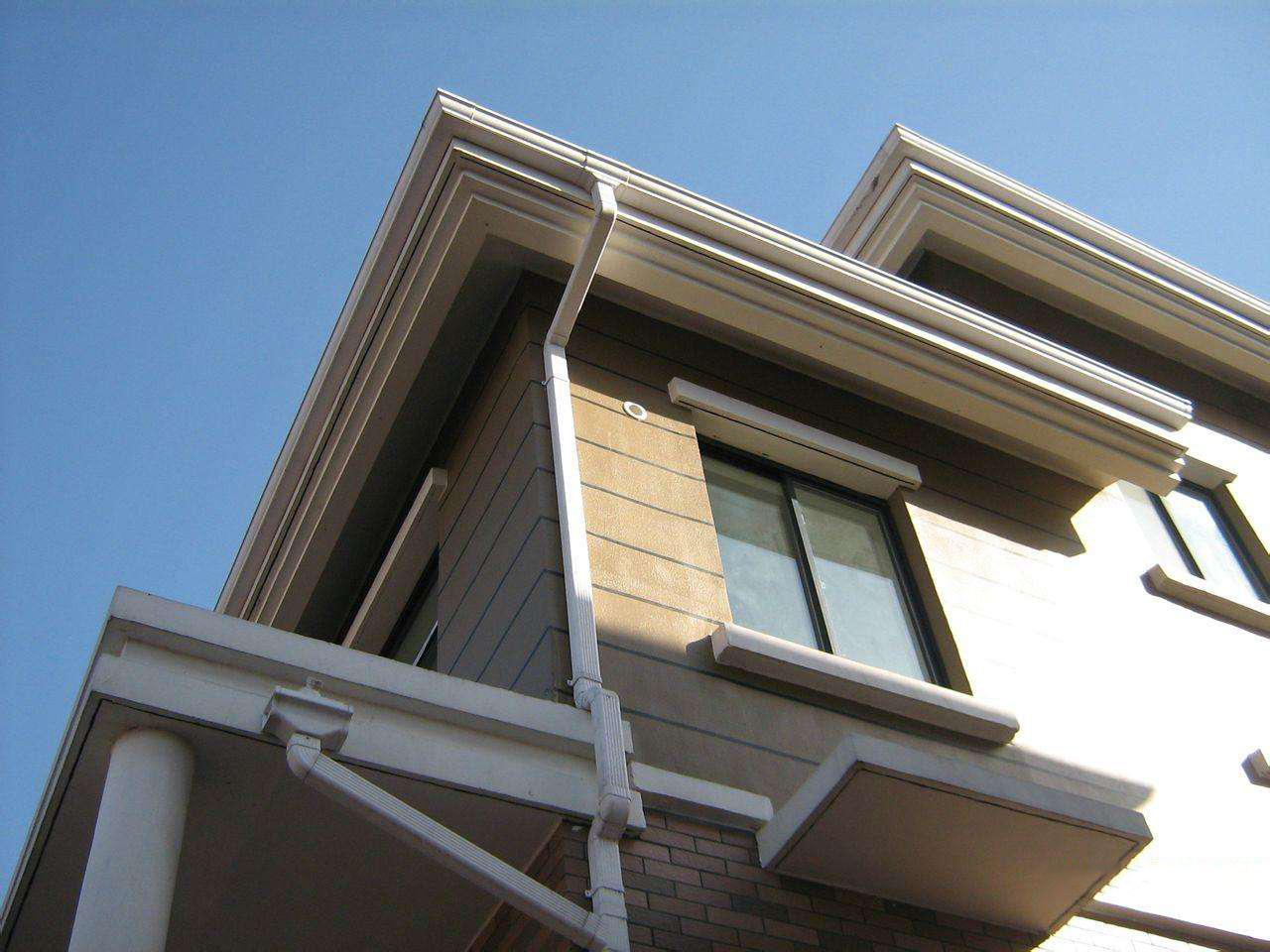
- Gutter downspout is the vertical drainage carrier of the entire system, undertaking the core task of vertical water delivery. It connects with the horizontal gutter system to collect the rainwater accumulated in the gutters and vertically transport it from the roof to the ground drainage area. It concentrates scattered rainwater for centralized discharge, effectively prevents roof rainwater from flowing randomly and eroding building walls, foundations and exterior decorations, and protects the building structure from rainwater erosion and damage.

- Downspout elbow is a special matching accessory for downspout directional adjustment. Installed at the top, bottom or middle turning positions of vertical downspouts, it changes the vertical flow direction of rainwater, enables the downspout to bypass building protruding structures, wall corners and obstacles, and fits the building’s exterior installation space. At the same time, it can guide the discharged rainwater to the designated ground drainage position, avoid rainwater splashing back to wet the wall or accumulate around the foundation.

- Gutter connector is a standard splicing accessory for straight gutter sections. It is used for seamless docking and assembly of multiple gutter sections during long-distance gutter installation. It adopts a tight connecting structure to fix adjacent gutters firmly, eliminate assembly gaps, prevent rainwater leakage and seepage at the splicing joints, and ensure the overall integrity and tightness of the horizontal gutter drainage channel.

- Pipe strap is a professional fastening accessory for downspout fixing. It is specially used to fix vertical downspout pipelines on building walls. With high fitting and fastening performance, it can firmly lock the downspout to avoid pipeline shaking, displacement and falling off caused by wind vibration, rainwater impact and other external forces. It keeps the downspout vertical and stable for a long time, ensuring the continuity and stability of vertical drainage.

All the above supporting accessories cooperate with the main gutter body to form a complete, stable and efficient building rainwater drainage solution. Each component complements and supports each other, solving various pain points such as leakage, blockage, unstable installation and difficult maintenance in traditional drainage systems, and is suitable for the rainwater drainage needs of various residential, commercial and industrial buildings.
What does a rain drainage system do?
The main function of a rain drainage system is to collect and direct rainwater safely away from the building. Without controlled drainage, water falls directly from the roof and accumulates around the foundation, causing structural issues.
A properly installed gutter system captures runoff immediately and transports it through downspouts. This prevents erosion, basement flooding, and damage to landscaping.
Roof gutter system installations also protect exterior walls and windows by reducing direct water exposure. Continuous runoff without protection may stain walls, damage finishes, and promote mold growth.Modern home gutter systems improve water control while reducing maintenance requirements. Products such as rain gutter guard system solutions and gutter protection systems prevent debris buildup and maintain flow efficiency.
Aluminum gutter products are especially popular because they combine durability with low maintenance. Their corrosion resistance ensures long-term performance even under harsh weather conditions.
Some systems integrate gutter cleaning system designs to simplify maintenance and improve service life.Overall, a rainwater gutter system acts as a protective barrier between rainwater and the building structure, preserving safety and reducing long-term repair costs.

What damage will occur to homes without a rain drainage system?
Homes without rain gutter systems face significant risks because uncontrolled water directly affects the structure and surrounding environment.
| Problem Category | Specific Damages & Impacts | Solution & Benefit |
|---|---|---|
| Building Foundation | Rainwater buildup near the base weakens soil, triggering ground settlement and cracks. | Aluminum gutters + gutter guards divert water properly to prevent foundation issues. |
| Exterior Walls | Persistent runoff causes stains, water seepage, mold and peeling paint. | Effective drainage keeps walls dry and intact. |
| Roof Parts | Constant water exposure leads to rot and corrosion on fascia boards and roof edges. | Well-functioning gutter systems protect roof components from water damage. |
| Landscaping | Uncontrolled runoff erodes soil, destroys plants and damages walkways and gardens. | Guided water flow avoids soil loss and landscape destruction. |
| Extra Maintenance | Lack of gutter guards leads to frequent debris buildup and standing water, increasing upkeep work. | Gutter guards reduce dirt accumulation and cut down maintenance needs. |
| Cost Comparison | Skipping installation saves upfront cost, yet water damage results in far higher long-term repair fees. | Reasonable installation cost helps avoid expensive subsequent repairs. |
Therefore, a rainwater drainage system should be considered an essential building protection component rather than an optional accessory.
Benefits of the two rain drainage system types?
The two most common rain gutter systems are K-style gutters and half-round gutters. Each type offers distinct advantages depending on architectural style and performance requirements.
1. K-style Gutter Systems (Mainstream for Modern Residential Buildings)
Superior drainage capacity: K-style gutters feature a optimized structural shape with larger internal water capacity. They can efficiently bear and drain heavy rainfall, making them highly suitable for high-precipitation areas and effectively avoiding roof rainwater overflow.
Simple and efficient installation: The flat rear design of K-style gutters enables direct and firm attachment to roof fascia boards. The overall installation process is simpler and more labor-saving, with high fitting accuracy for conventional residential roof structures.
Strong compatibility: This gutter style matches perfectly with various gutter guard products and aluminum gutter protection systems, which can be freely equipped with protective accessories to realize anti-clogging and efficient drainage functions.

2. Half-round & Quarter-round Gutter Systems (Classic & Decorative Type)
Stable practical performance: While highlighting decorative features, half-round gutter installations maintain stable rainwater drainage and can fully meet the conventional rainwater discharge needs of buildings.
Smooth water flow & low maintenance: The integral rounded profile of half-round gutters creates a unobstructed water flow path. It effectively reduces debris adhesion and accumulation during water drainage, endowing the system with excellent self-cleaning performance and greatly lowering daily maintenance difficulty.
Decorative & architectural adaptability: Quarter round and half-round gutter systems present a classic, elegant appearance. They are the preferred choice for historic buildings, retro-style architectures and scenes requiring decorative facade effects, balancing practicality and aesthetic value.

The choice depends on climate, building design, and maintenance preferences, but both options provide effective rainwater management when installed properly.
Need a reliable supplier for rain drainage system parts?
Choosing a reliable supplier is essential because the quality of drainage components directly affects system performance and lifespan.
A professional supplier should provide complete rain gutter systems solutions rather than individual products only. This includes gutters, hangers, downspouts, outlets, guards, clips, and accessories.
Customization capability is another important factor. Modern projects often require different materials, sizes, and finishes. Suppliers with OEM and ODM capabilities offer greater flexibility.
Production capacity and quality control also matter. Stable manufacturing ensures consistent product quality and timely delivery.
Ruichi Hardware offers complete rainwater drainage system products including gutter, gutter hanger, downspout, gutter end cap, gutter outlet, gutter corner, downspout clips, rainwater hopper, gutter guards, and related accessories. Their drainage products are designed for efficient and stable water management across various building applications.
The company also supports customized materials, surface treatments, and dimensions while providing OEM and ODM services from product design through delivery.
Selecting a reliable supplier helps reduce installation risks and ensures long-term drainage performance.

Rainwater drainage systems protect homes from water damage, improve durability, and reduce maintenance. Proper components and reliable suppliers ensure efficient long-term performance.
Or further questions, please contact [email protected].



 English
 Spanish
 French
 Russian
 Portuguese
 German
 Arabic