
A ventilation package is never one part. It is a duct, four corners at every joint, a clamp at every corner, a seal, a door, a damper — bought from whoever answered the last email. Each part passes its own drawing. The joint is where the money goes.
- Split sourcing does not fail at the part. It fails at the interface, where two parts in tolerance still do not meet each other.
- Six suppliers means six MOQs, six freight bookings, six inspection reports — and six people who can prove their part was right.
- One source removes that risk only if it controls the profile, gauge and coating on both sides of the joint.
- The cheapest test is not a factory tour. It is 300 mm of your own duct, returned as a fitted joint.
The bill of materials nobody owns
Take one 400 × 400 mm supply run. Before a damper is hung it needs nine hardware items: corners at every joint, clamps along every edge, a cleaning door, a connector at the unit, and a damper with blade, shaft, regulator and bracket.
None of it is hard to make: grams of 0.6–1.2 mm galvanised steel, one fold, one punch, one coating. The difficulty is that no drawing describes the assembly. Each supplier works to a part drawing with its own tolerances, gauge assumption and idea of fitting — and the surface where the parts meet belongs to nobody.
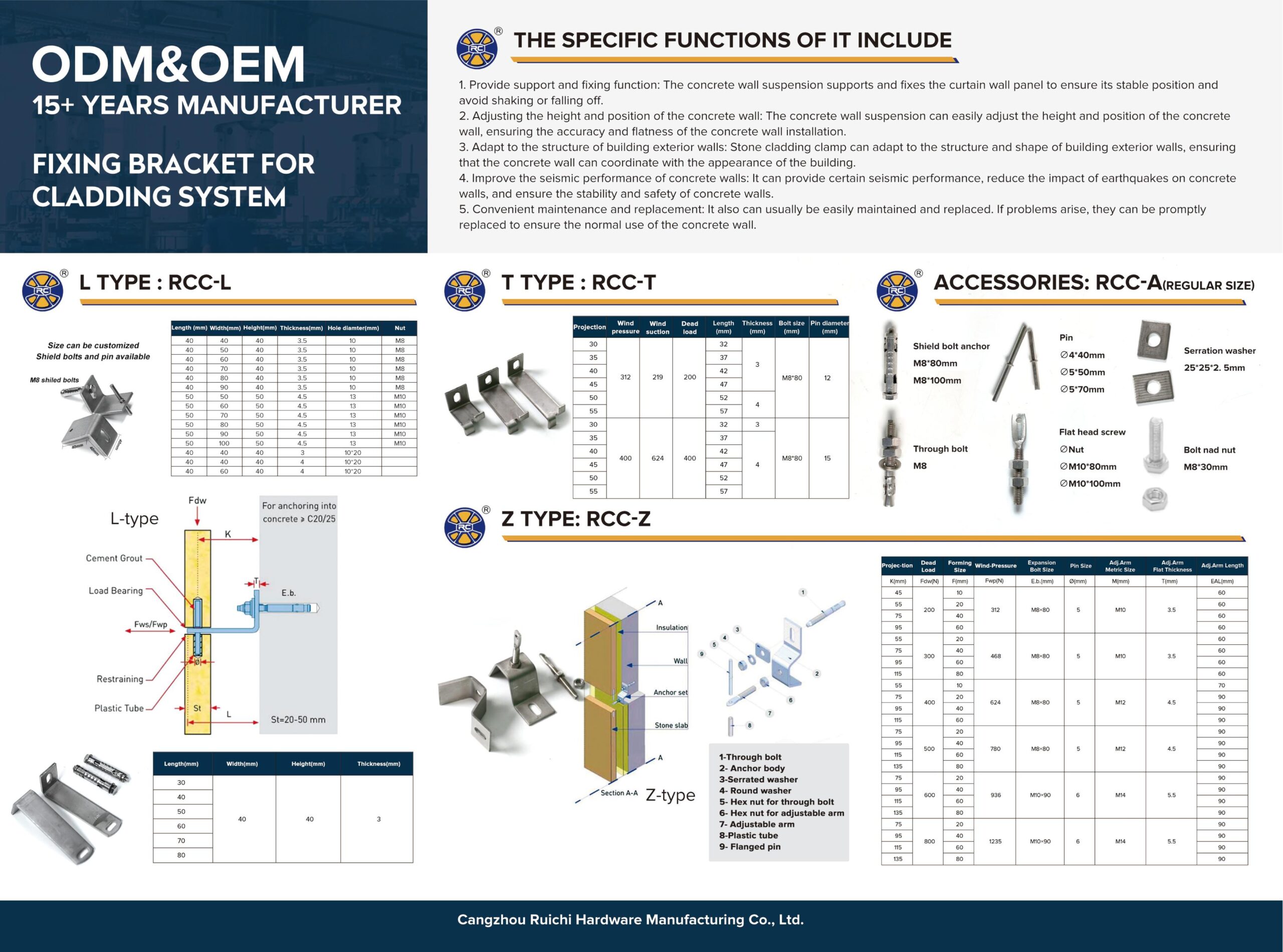
A catalogue is a poor unit of purchase because it lists parts, and parts are the one thing you can always buy. Start from the accessory families we form and read mating dimensions, not pictures.

What actually fails at the joint
Ask a contractor what goes wrong and you will not hear “the corner was the wrong shape”. You will hear “we had to beat it in” — a tolerance stack described in the field.
Four deviations meet at one transverse TDF joint: stamped corner leg position, folded flange depth, duct-end squareness, and the gauge step between the two sections. Each is reasonable alone; together they exceed the window in which a clamp closes by hand.
- Corner legstamper
- Flange foldduct shop
- Duct squarenessduct shop
- Gauge stepunowned
The clamp is not the fault, it is the messenger. Nor is the remedy a tighter part drawing — tightening one tolerance while three float moves the total by a fraction of a millimetre. The remedy is somebody owning the stack.
It is also why a failed pressure test is so hard to claim. Corner in tolerance, clamp in tolerance, duct in tolerance. Everyone is right, the system leaks, and the cost lands on the installer — the one party in no purchase order.

The arithmetic of six suppliers
Piece price is the number buyers compare and the smallest line in the comparison. Run the same 2,000-piece release through a split BOM and through one supplier, and the difference shows up everywhere but the unit cost.
| Line | Six suppliers | One release |
|---|---|---|
| Minimum order | 6 MOQs, each on one item | 1 MOQ across 8 items |
| Freight | 6 bookings, 6 document sets | 1 consolidated shipment |
| Inspection | 6 reports, 6 AQL decisions | 1 report covering the joint |
| Sample rounds | 6 sets, 6 approvals | 1 fitted joint sample |
| Engineering change | 6 emails, 6 confirmations | 1 conversation |
| Owns the interface | Nobody | The supplier, in writing |
Every row costs working capital and calendar time, and none of it appears in a quotation. The single quote comes back a few percent higher per piece and considerably lower per completed joint, because the cost you were avoiding does not disappear — it moves to the site.
What one supplier can and cannot fix
Consolidation is sold badly, so scepticism is fair. The honest version is narrower.
What one source can hold: one agreed interface dimension between corner and flange; one gauge family across the release; one coating spec and thickness report; one inspection covering mating dimensions, not parts in isolation; one packing list that matches the container.
What it cannot: your duct gauge, the torque an installer applies, whether the surface was degreased, and whether a 1.2 mm duct and a 0.8 mm flange can share the clamp you specified. The useful supplier says so before the container ships.
That is the difference between a manufacturer and a trader. A trader can source all eight items; only a manufacturer can say two of them will not fit, because only a manufacturer holds the tooling that sets the fold. It is why the corner range is quoted by leg length and thickness.

Eight part families, one release
The short list we actually form: parts that must agree with each other before a run goes together.
| Family | What it has to agree with |
|---|---|
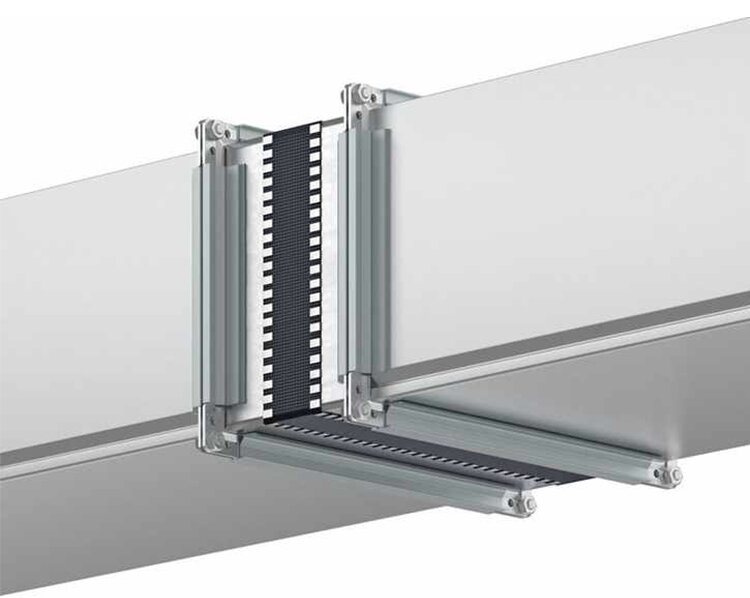
| TDF / TDC duct flange corner | Flange fold depth, wall thickness |
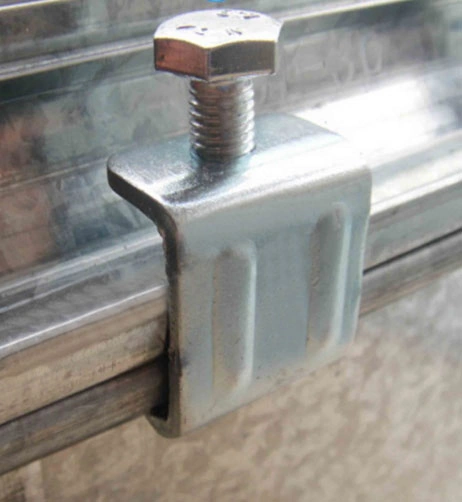
| Flange clamp / G-clamp | Combined thickness of the two flanges |
| Porte d'accès à la gaine | Wall thickness, cut-out, gasket |
| Cam lock for access door | Door frame depth and latch travel |
| Flexible duct connector | Collar diameter, spigot size |
| Damper blades and hardware | Blade width, shaft diameter, case bearing |
| Damper regulator handle | Shaft end, handle landing point |
| Support du clapet coupe-feu | Case size, sleeve size |
Eight rows, eight mating dimensions, one column no part-level quotation asks about. Ask every supplier what their part mates with, and write it next to the part number.

The flexible connector shows why that column matters. Coated fabric locked to a steel collar means two supply chains meet inside one sleeve. Roll the collar to nominal, put the spigot at the top of its tolerance, and the clamp closes the difference while the fabric tears. See how a flexible connector is built.
The RFQ that gets a real price
Most ventilation RFQs come back as a range because the enquiry was a range. Six inputs decide whether the answer is a number you can budget against.
- Material and gauge, per item. “Galvanised” is a coating, not a thickness. 0.8 and 1.2 mm are different tools at different prices.
- The profile, with the mating dimension marked. A drawing with the interface called out removes the guesswork.
- Coating, and the thickness you will accept. Z275, powder or e-coat — and how you will verify it on arrival.
- Annual volume et release size. Different numbers, different costs: tooling amortisation versus setup time.
- Packaging. Bulk, bagged by size, or kitted per joint — kitting usually earns its cost.
- Destination and Incoterm. It decides whether consolidation saves you anything.
Miss any of the first three and you get a range; miss the fourth and you get a price that changes at order confirmation. That needs a better enquiry, not a better supplier.
Send a 300 mm offcut
The fastest way to evaluate a supplier is not a factory tour, and certainly not a video call with a catalogue. Cut 300 mm off the duct you actually use, keep the flange fold, and send it with two of the clamps you actually fit.
Ask for the joint back, assembled, corner fitted, dimensions recorded. You learn in one parcel whether their profile matches your fold, whether their throat closes on your gauge pair, what their edge finish survives handling, and whether they understood the question.

Questions buyers actually ask
Un fournisseur est-il vraiment moins cher ?
Not necessarily per piece. Consolidated freight, one MOQ and one inspection round usually offset the few percent of unit price you give up. The dependable saving is field labour.
Nous disposons déjà d'outils pour les angles. Pouvez-vous nous proposer des outils équivalents ?
Usually. Send a sample, or the profile drawing with the mating dimension marked; we check it against existing tools before quoting, and say so if it needs a new one.
Does a single source — or a trader — leave me dependent?
Only if the tooling and drawings belong to someone else, and a trader adds a layer rather than an owner. Keep tooling ownership and interface dimensions in writing, and check that whoever consolidates also inspects the mating dimensions. That is ordinary OEM practice.
Fabriquez-vous le conduit lui-même ?
We form the hardware that goes on it: corners, clamps, access doors, connectors, damper parts. Your duct shop rolls and folds the duct. We make what joins it.
Quelle est la plus petite commande qui soit raisonnable ?
One carton per item as a fitted joint sample, then a mixed pallet. Volume pricing starts when the release size is worth a setup.
Send the offcut. We’ll send the joint back.
We form TDF/TDC corners, flange clamps, access doors, connectors and damper hardware to your drawing — and we check the mating dimensions before we quote.
Request a fitted joint sample See the full hardware range
RC Hardware · Cangzhou Ruichi Hardware · OEM/ODM since 2009




 French
 English
 Spanish
 Russian
 Portuguese
 German
 Arabic