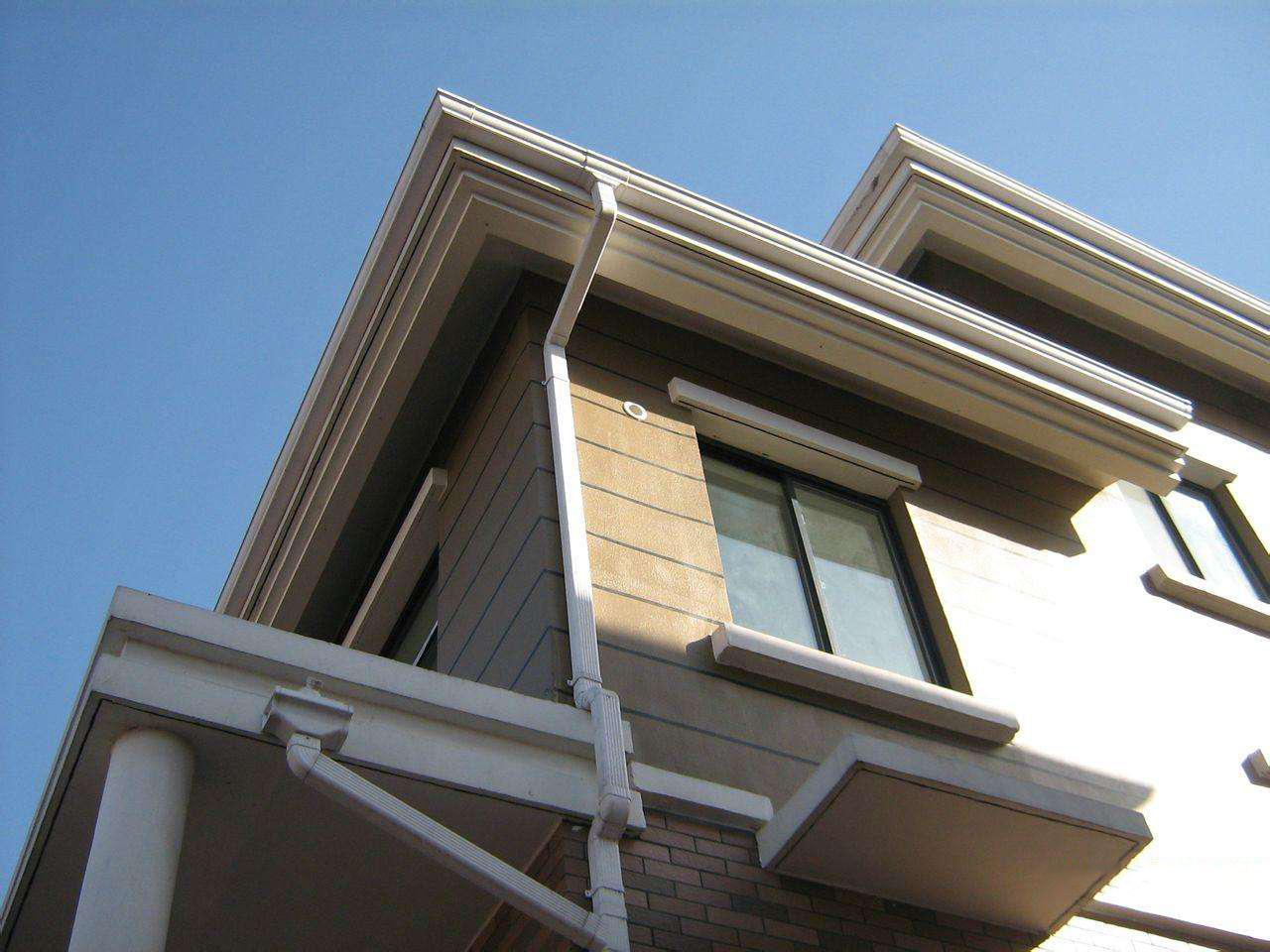
Heavy rain isn’t always the problem. The problem is where the water goes.
When rain reaches a roof, it needs a controlled path from the roofline to the ground. Without a properly designed drainage system, water can overflow from gutters, run down exterior walls, collect around foundations, or create unnecessary maintenance problems.
That is why a reliable gutter system is more than just a gutter. It is a combination of components working together to collect, control, and direct rainwater where it needs to go.
In this guide, we’ll look at how a complete gutter system works, what its key components do, how to choose the right configuration, and what buyers should consider when sourcing gutter components.

A Gutter Is Only One Part of the System
A gutter may be the most visible part of a rainwater drainage system, but it is only one piece of the puzzle.
A typical drainage path looks like this:
Roof → Gutter → Outlet → Downspout → Ground Drainage
The gutter collects water from the roof and carries it along the roofline. The outlet transfers water into the downspout, while elbows help the downspout follow the building’s shape. At the same time, hangers and brackets keep the gutter securely supported, end caps close the open ends, and connectors join gutter sections together.
Leaf guards can also be added where reducing leaves and debris entering the gutter is a priority.
The idea is simple: every component has a job, and the system works best when those components work together.

How Does a Complete Gutter System Work?
A well-designed gutter system gives rainwater a predictable route instead of leaving it to find its own way.
| Stage | What Happens |
|---|---|
| Rain Reaches the Roof | Rainwater naturally moves toward the lower edges of the roof. Roof size, design, and local rainfall influence the amount of water the drainage system needs to handle. |
| The Gutter Collects the Water | Installed along the roof edge, the gutter collects rainwater and channels it toward designated outlet points. |
| The Outlet Transfers the Water | The gutter outlet connects the horizontal gutter to the vertical downspout, creating a continuous drainage path. |
| Elbows Guide the Direction | Elbows allow the downspout to change direction around walls, eaves, corners, and other structural elements. |
| The Downspout Carries Water Downward | The downspout moves collected rainwater from the roofline toward the ground or another designated drainage point. |
| Water Reaches the Drainage Area | Depending on the project, water may be directed to ground drainage, stormwater systems, drainage channels, or rainwater collection systems. |
The Key Components of a Gutter System

Gutters
The gutter is the main collection channel of the system. Its job is to collect rainwater from the roof and guide it toward the outlet.
When choosing a gutter, buyers may need to consider its size, profile, material, length, roof configuration, and expected rainfall.
Common sizes can work well for many projects, while larger or custom configurations may be appropriate for specific applications.

Gutter Hangers & Brackets
Gutter hangers and brackets provide the support needed to keep the gutter securely positioned along the roofline.
The correct hardware depends on the gutter profile, material, roof structure, installation method, and required support spacing.
For larger projects, compatibility between the gutter and its supporting hardware is especially important. A small bracket may not look like the most exciting part of a drainage system, but discovering it does not fit after delivery is an excellent way to make everyone suddenly interested in spreadsheets.

Gutter End Caps
End caps close the open ends of the gutter and help keep water inside the intended drainage path.
Although simple, they need to match the gutter profile and dimensions correctly. Buyers may also need to consider material, finish, and left- or right-hand configurations where applicable.

Gutter Outlets
The outlet creates the transition from the horizontal gutter to the vertical downspout.
A suitable outlet should match both the gutter and downspout configuration. Its position also needs to work with the overall drainage layout so that water can leave the gutter efficiently.

Downspouts & Elbows
Downspouts carry collected rainwater from the roofline toward the ground, while elbows allow the drainage route to change direction.
Together, they help the system follow the building’s structure without forcing the downspout into a perfectly straight path that exists mainly in the dreams of technical drawings.
Size, shape, material, length, and connection method should all be considered when selecting downspout components.

Gutter Connectors
Connectors join separate gutter sections and help create a continuous drainage channel.
For distributors and contractors, consistent compatibility between gutters and connectors is important, particularly when purchasing complete systems or larger quantities.
Leaf Guards & Gutter Guards
Leaves, twigs, seeds, and other debris can enter an exposed gutter and increase maintenance requirements.
Leaf guards and gutter guards are designed to reduce the amount of debris entering the gutter while allowing rainwater to pass through.
They can be particularly useful around buildings surrounded by trees, although they should be considered part of a complete maintenance and drainage strategy rather than a replacement for one.

How to Choose the Right Gutter System
There is no single gutter configuration that works for every building. The right choice depends on the project.
Roof Size
Larger roof areas can collect more rainwater, so drainage capacity needs to be considered as part of the overall design.
Rainfall
Local rainfall conditions matter. Projects in areas with heavier or more frequent rainfall may require different gutter and downspout configurations than projects in drier climates.

Gutter Size
The appropriate size should be considered alongside roof area, rainfall, profile, and overall system design rather than selected in isolation.
Material
Common options include:
- Aluminum
- Stainless steel
Material selection may depend on environmental conditions, durability requirements, appearance, weight, and project specifications.
Building Type & Installation
Residential, commercial, and industrial buildings can have different drainage requirements. Installation conditions also affect the choice of hangers, brackets, outlets, elbows, connectors, and other components.
Standard Gutter Systems vs. Custom Solutions
Standard components are a practical choice for projects using common dimensions and profiles. They can simplify sourcing and help keep installation straightforward.
But not every roof follows standard dimensions.
Custom solutions may include:
- Custom gutter sizes
- Custom lengths
- Custom profiles
- Custom brackets
- Custom colors or finishes
- Custom packaging
- OEM production
For distributors, contractors, and project buyers, working with a manufacturer that can handle both standard and custom requirements can make sourcing a lot simpler.

How Gutter Components Are Manufactured
Reliable drainage components start with consistent manufacturing.
A typical production process may include:
Raw Material → Cutting → Stamping / Forming → Bending → Surface Treatment → Quality Inspection → Packaging
Material is prepared according to the required specifications before components are cut and formed. Stamping and bending create the required profiles and shapes, while surface treatment can provide the specified finish and protection.
Quality inspection then focuses on factors such as dimensions, thickness, appearance, and component consistency.
Finally, finished products are packed for storage or shipment. For export projects, suitable packaging and palletizing are also important parts of the supply process.


What Should Buyers Look for in a Gutter System Manufacturer?
When comparing manufacturers, price is only one part of the decision.
A reliable supplier should ideally offer:
- A complete range of gutter components
- Consistent product dimensions
- Suitable material and finish options
- Custom manufacturing capability
- Quality inspection procedures
- OEM and bulk production support
- Export-ready packaging
The advantage of working with a manufacturer that understands the complete system is that components can be considered together rather than purchased as disconnected parts.
Built for Projects, Not Just for Catalogs
Every building has different drainage requirements. Some projects need a straightforward standard system, while others require specific sizes, profiles, materials, or component configurations.
The goal is simple: make it easier to source the components you actually need from one manufacturing partner.
Looking for a complete gutter system or custom drainage components for your project?
Send us your required sizes, materials, quantities, and specifications to discuss the right configuration for your application.